Drip on a Party Wall
Inside The Building
Water runs down the wall you share with the next business.
On The Roof
Flashing where your roof meets the neighbor's taller wall has pulled loose.

We serve as a Southland commercial roof repair contractor for older blocks with shared walls, where water off a taller neighbor can drip inside your space.
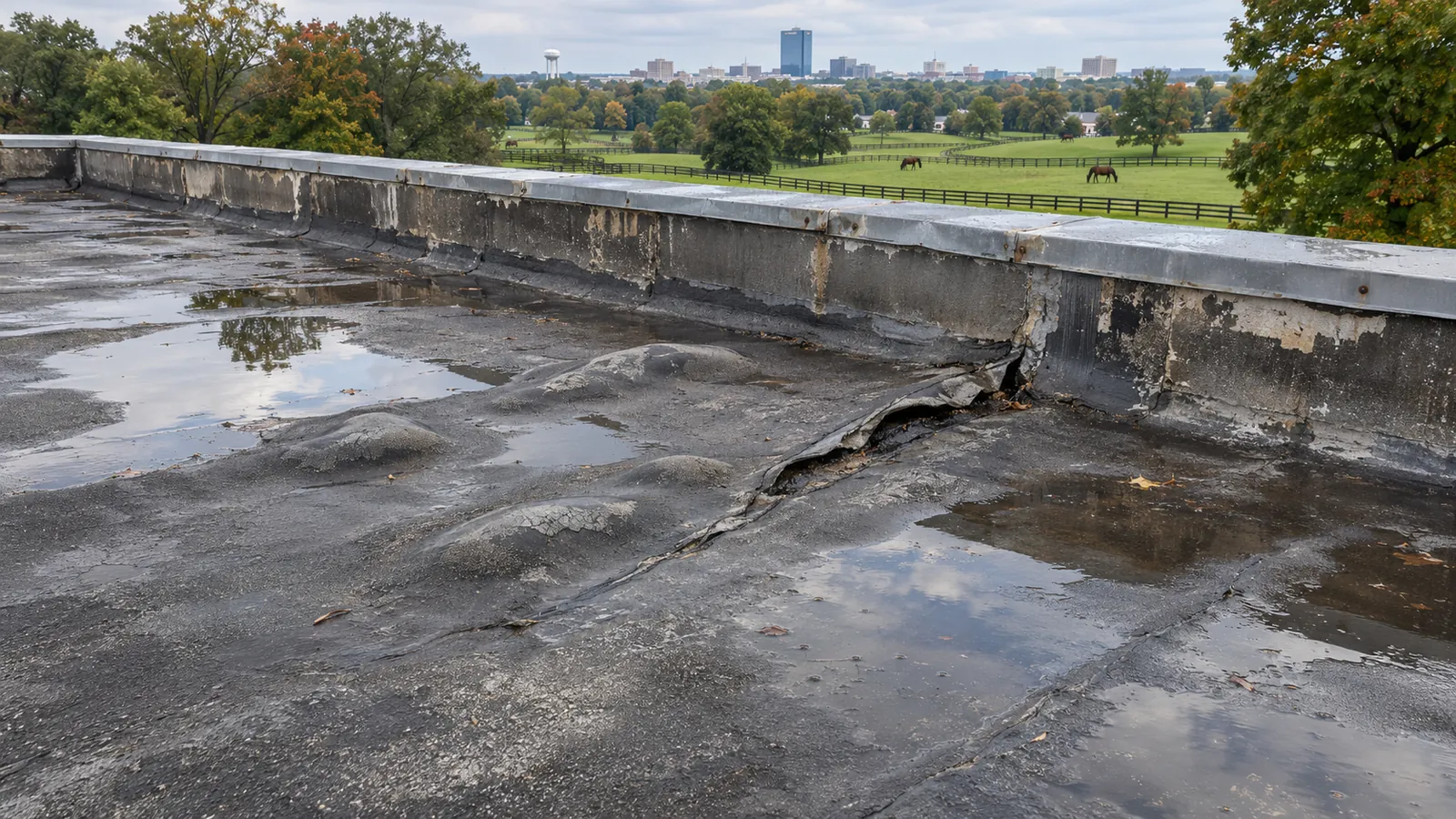
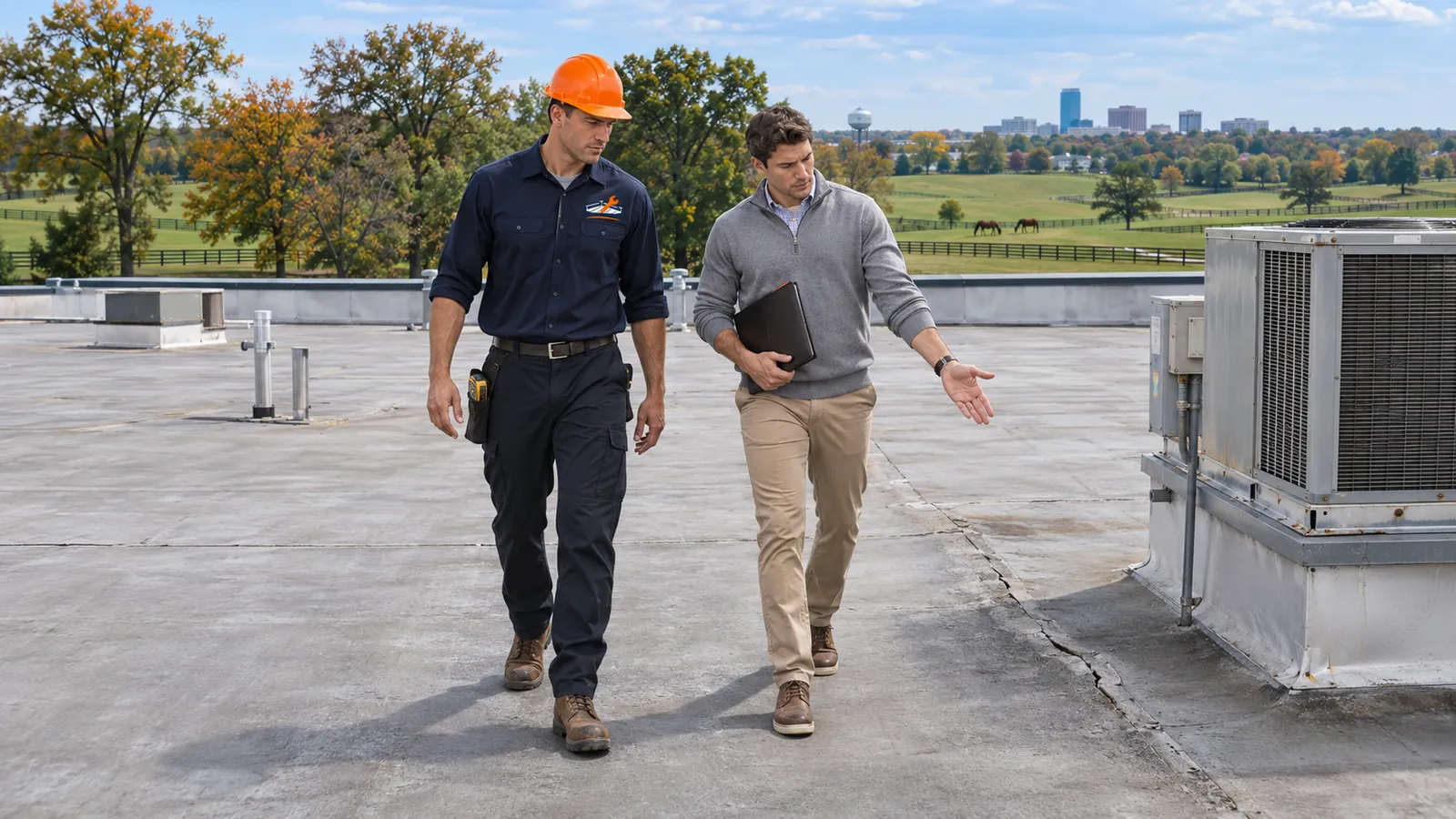
Many jobs for a Southland commercial roof repair contractor along Southland Drive involve two roofs. Buildings that share or touch walls pass water through the joint between them, and runoff from a taller roof can soak the wall and drip inside the next business.
Fixing those leaks can take both owners working together.
When nothing on your roof explains the drip, look at the building beside it.
Water runs down the wall you share with the next business.
Flashing where your roof meets the neighbor's taller wall has pulled loose.
Paint blisters on the inside face of the shared wall after rain.
Coping caps on the shared parapet have open joints.
Drips appear beside the wall below a neighbor's downspout.
A scupper or gutter on the taller roof empties onto your lower roof and overwhelms its flashing.
A line of stains follows the property line across your ceiling.
The seam or expansion joint between the two roofs has split.
When a leak comes from the joint between two buildings, sealing your side alone keeps failing. Repairing the shared flashing, coping, or roof joint with both owners on board stops the water where it starts.
Fixing the shared detail once protects both buildings.
Gutters and scuppers from the taller roof get reset so water lands where your roof can handle it.
Photos and notes show both owners what failed and where.
Sealed coping and counterflashing let the shared wall dry out between storms.
Older commercial blocks around Southland call for these repairs most.
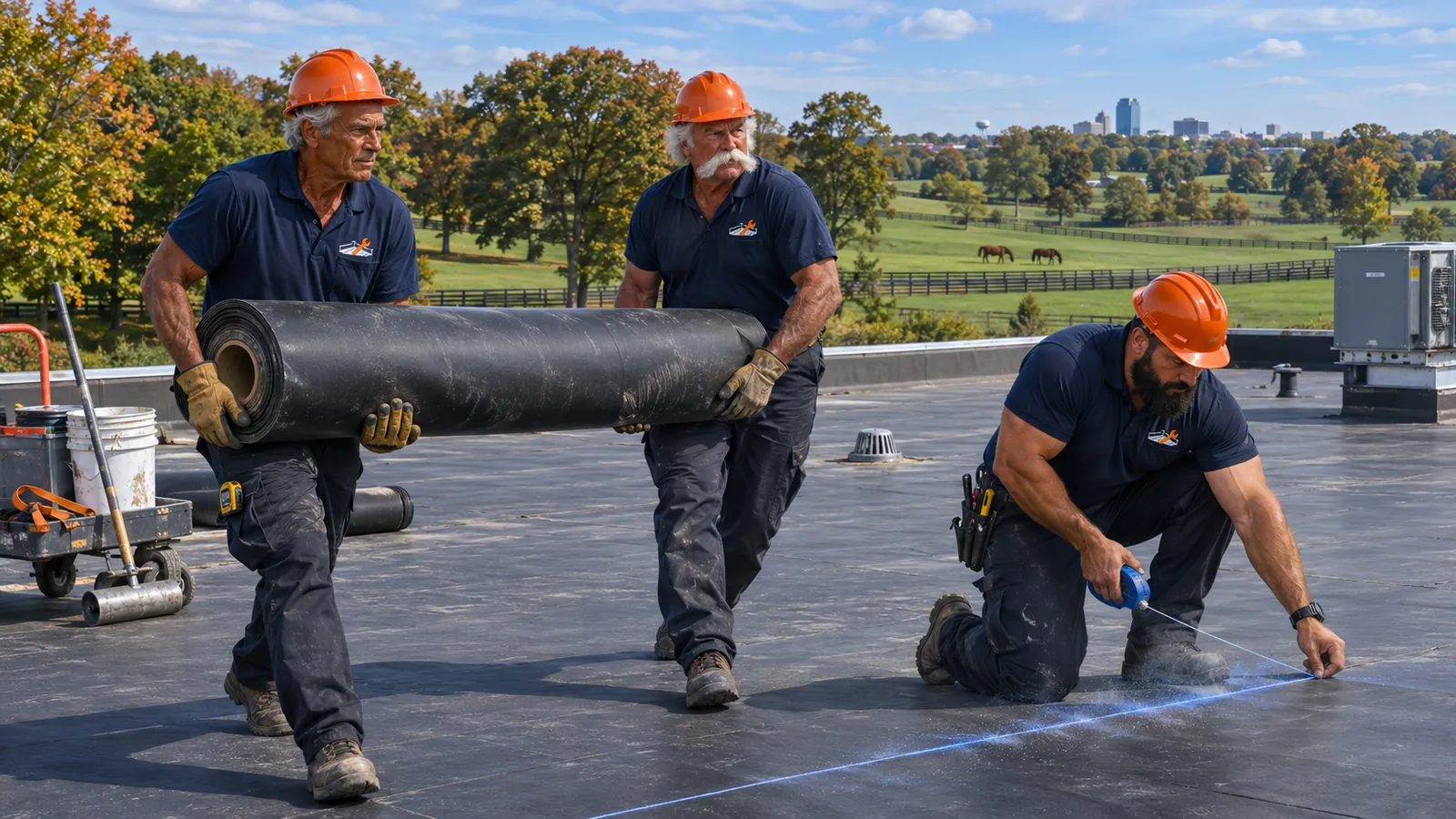
Shared wall flashing repair in Southland ties new membrane up the neighbor's wall and under fresh counterflashing.
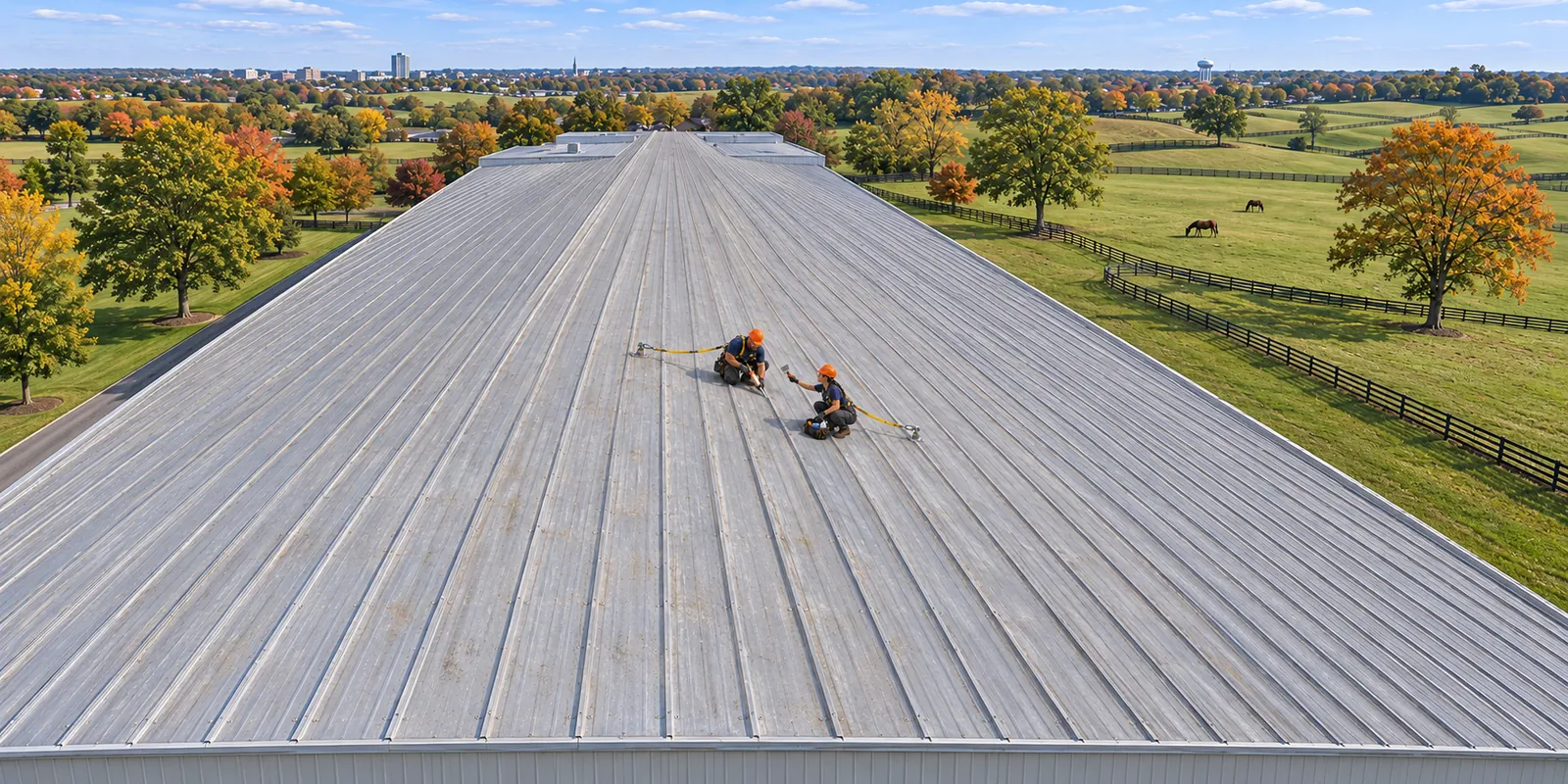
Metal additions behind older storefronts get fastener and lap repairs where they butt into masonry.
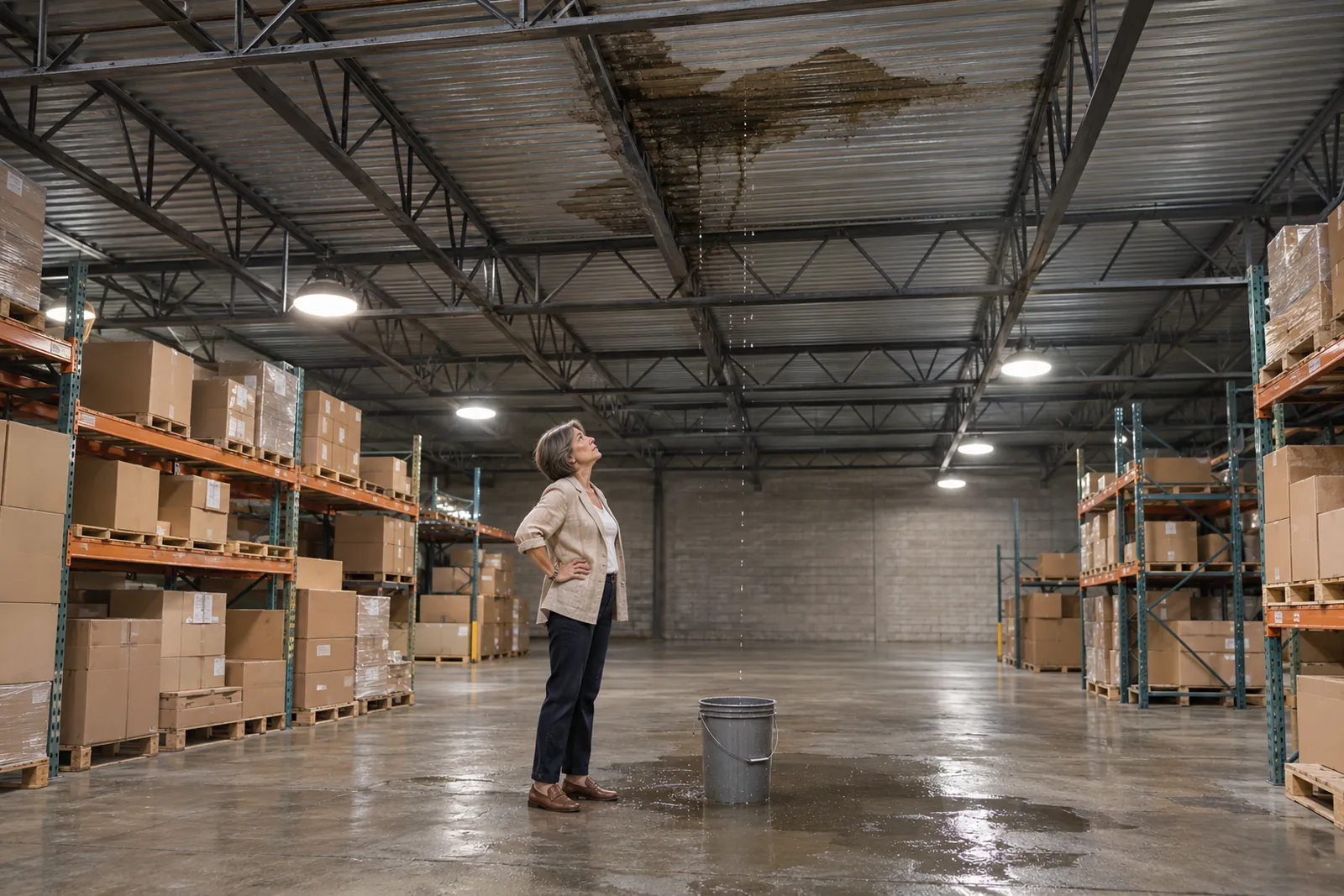
Leak tracing checks both roofs, with the neighbor's permission, before deciding which side holds the source.

Warehouses on shared lots get drainage and joint repairs where buildings meet.
Water at a shared wall often starts on the roof next door. Call us and we will check both sides of the joint.
Call UsShared-wall leaks take a look at your roof and the one beside it.
We walk your roof along the shared wall and, with the neighbor's permission, the edge of theirs that drains toward you.
Hose tests run on each roof separately, so the source side is clear before anyone pays for a repair.
Wall flashing, shared coping, scuppers, or the roof joint get repaired on the side that failed.
Photos and notes go to you and, if you agree, to the neighboring owner.
Southland sits among the areas we cover for commercial roof repair, listed here. For a building elsewhere, call us or send us a message.
Shared walls, neighboring roofs, and runoff from above.
Yes. Buildings in the Southland Drive area that share or touch walls pass water through the joint between them, and runoff from a taller roof or through a shared parapet can soak the wall and drip into the next business.
We check the flashing where roofs meet walls, shared coping, and gutters or scuppers that empty onto the lower roof. LFUCG's Division of Building Inspection handles permits.
A leak from a neighboring building roof shows up under hose testing. Water runs on one roof at a time while someone watches inside, and photos record which test brought the drip back.
That record gives both owners the same facts.
Lower roof scupper overflow wears out the flashing and membrane where the water lands. Fixes include a splash pad or extra membrane under the outlet, raised flashing at the wall, and resetting the upper scupper or downspout so water lands in a better spot.
Work on your own roof needs only your approval. Repairs to a shared parapet, the neighbor's flashing, or their scupper need the neighbor's permission.
We document the problem and give both owners the same photos to decide from.
Older blocks were built one at a time, so roofs meet at seams, steps, and expansion joints that move differently. When those joints split or the sealant ages, water follows the property line across the ceiling.
Yes. Raising the wall flashing on your side, adding a splash pad or extra membrane where the water lands, and asking the neighbor to redirect a scupper or downspout all cut the load on your roof. Gutters on the taller building that run toward you are worth checking too.
Tell us which wall the water follows and who owns the building next door. We will check both roofs and fix the source.
Want a call back about your roof?
Or call now: +1 (859) 204-8348