If Your Roof
Is Gummy or Cracked Around an Exhaust Fan
That membrane gets cut out and replaced with a grease-resistant sheet, with a containment box under the fan.
Start WithExhaust Area Repair
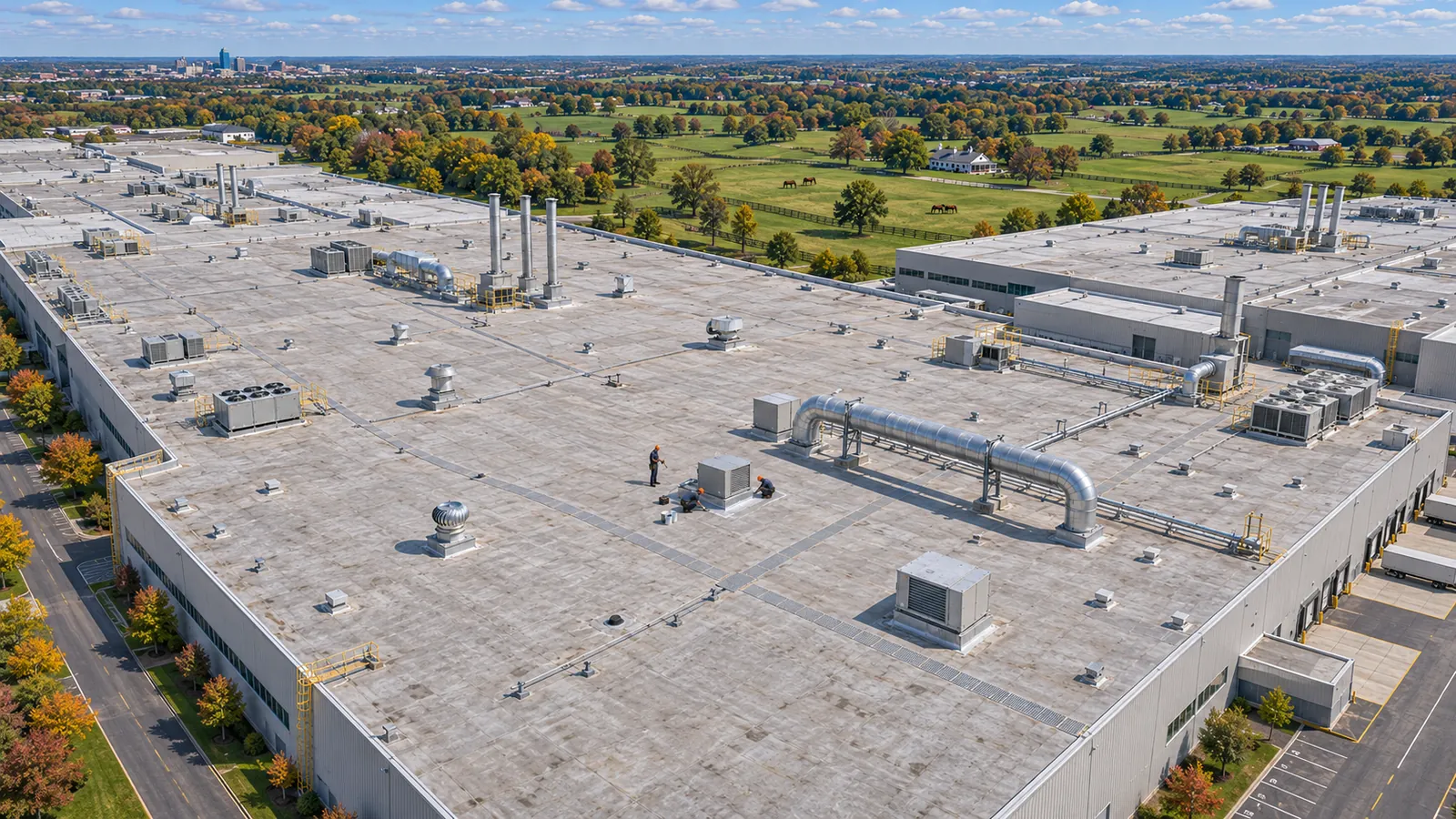
Work with a Lexington industrial roof repair contractor that plans each repair with your maintenance and safety staff, from exhaust fan damage to split expansion joints.
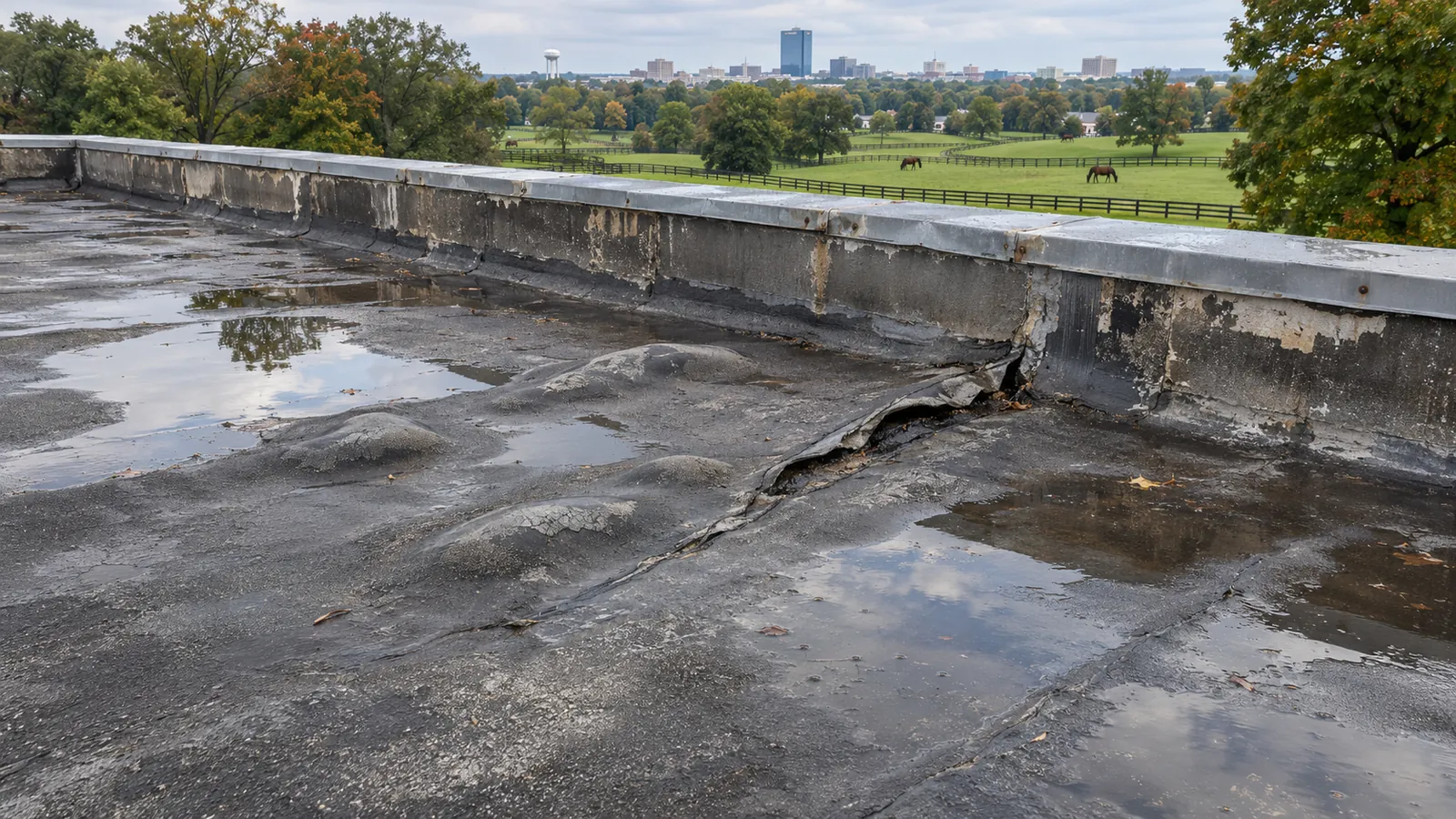
Large roofs fail in sections. A Lexington industrial roof repair contractor sorts which sections need a patch and which need a survey.
That membrane gets cut out and replaced with a grease-resistant sheet, with a containment box under the fan.
Split bellows or covers get replaced and the joint flashing resealed so the joint still moves.
Crushed insulation gets cut out and replaced, then walkway pads go down along that path.
A moisture survey marks every wet area on a roof plan before more patches go on.
On a plant roof, the floor below often shows trouble before anyone walks up top.
Drips show up near process equipment under a grease or vent exhaust.
Swollen EPDM or brittle TPO sits in the discharge path of the fan.
A straight stain runs across the ceiling along the building's length.
Expansion joint bellows have torn, and membrane at the joint ends is stretched tight.
Leaks gather in the bay under the path from the roof hatch to the units.
Cover board has crushed underfoot, and the membrane has scuffed or punctured.
Wet spots appear in a row across several bays over time.
Shrinkage and movement have opened a long seam run in separate stretches.
Four repair types cover most plant and warehouse roof calls.
Damaged membrane at the discharge point gets replaced with a grease-resistant sheet such as PVC, a sacrificial pad or containment box goes under the fan, and stacks get extended where heat is the cause.
Split bellows and covers are replaced and the joint flashing resealed, following the joint maker's detail where one exists, so the joint keeps moving as the building heats and cools.
Scuffed membrane gets patched, crushed boards get replaced, and pads get heat-welded or adhered along the paths service techs walk to each unit.
Infrared scans at night, capacitance or impedance readings on a grid, and core cuts mark wet areas on a roof plan so repairs replace only what is wet.
Smaller leak fixes happen during shifts once the area underneath is cleared or covered, and larger repairs wait for a shutdown or weekend window. Lines stay protected while the work goes on overhead.
Plant roof repairs are about keeping production running under a dry roof.
A survey-based plan cuts out the wet sections and leaves dry roof in place.
Grease-resistant sheets and containment boxes slow the breakdown that keeps returning around exhausts.
Walkway pads mark the path and spread foot loads across the membrane near rooftop units.
Grease softens membrane until it splits. Call us to plan a repair around your next shutdown window.
Call UsPlant repairs follow your safety rules from the first walk to the last photo.
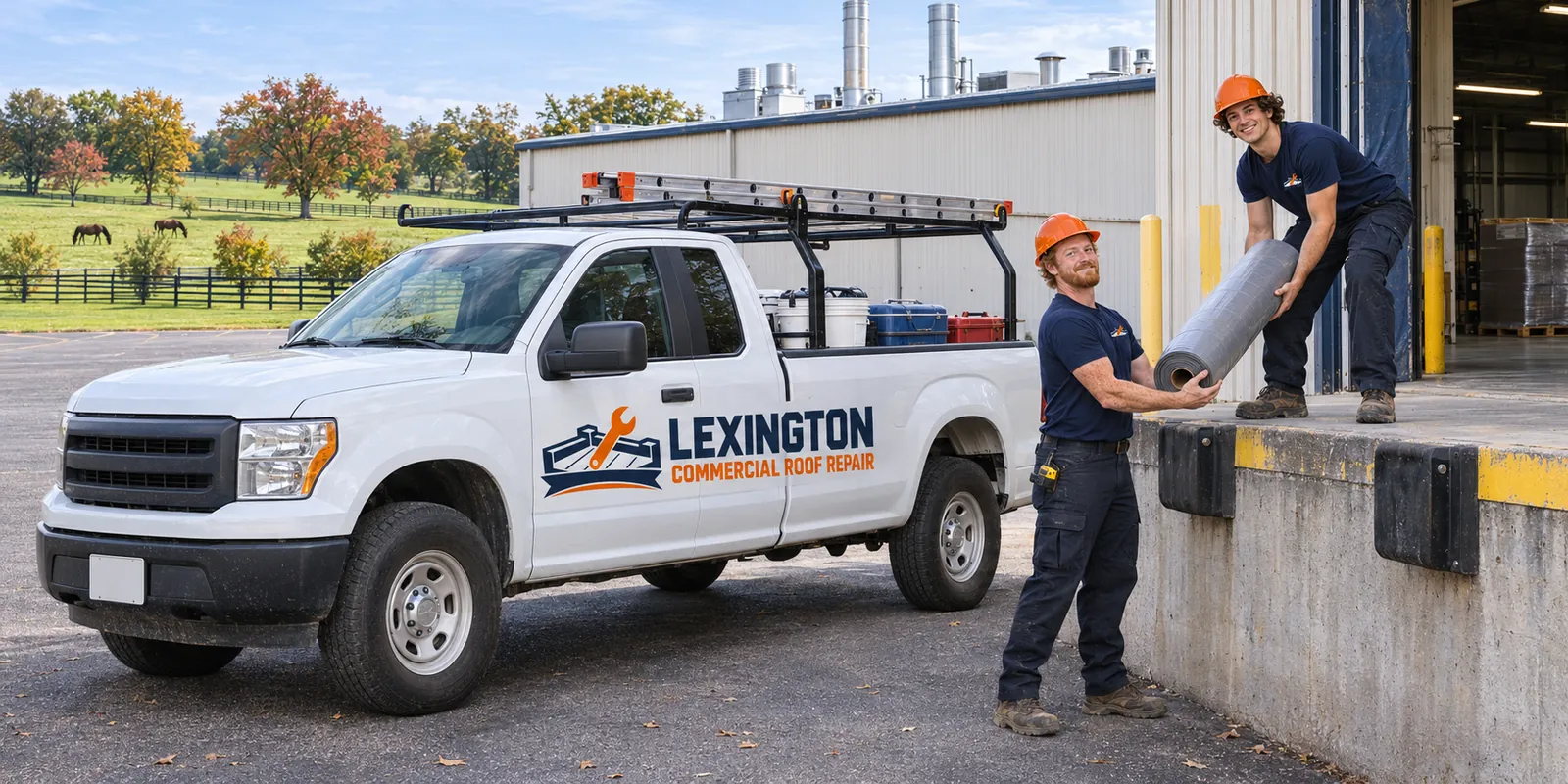
We walk the roof with your maintenance lead, note every fan, vent, joint, and service path, and confirm access from the hatch or ladder.
Lockouts for nearby exhaust fans, hot work permits for heat welding, and covers for lines below get agreed before the crew goes up.
Roofs with leaks in several places get an infrared or meter survey, so the plan cuts out only the wet sections.
Damaged membrane, joints, and boards get replaced section by section during shifts or the shutdown window.
Your maintenance file gets photos, the marked roof plan, and notes on areas to watch.
Plant campuses mix roof types, so these often come up on the same visit.
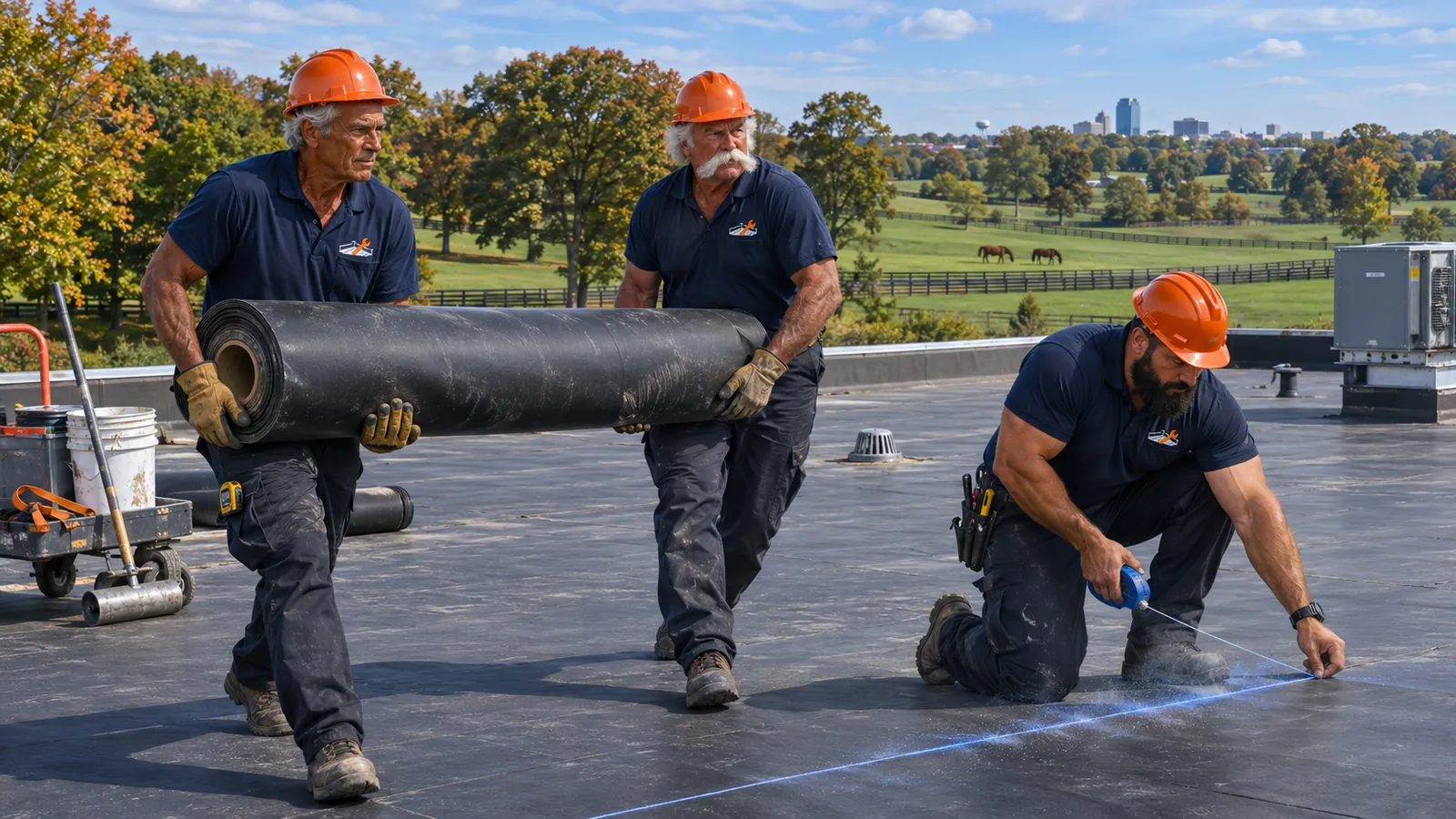
Office wings and low-slope additions get seam, blister, and drain repairs matched to their membrane.
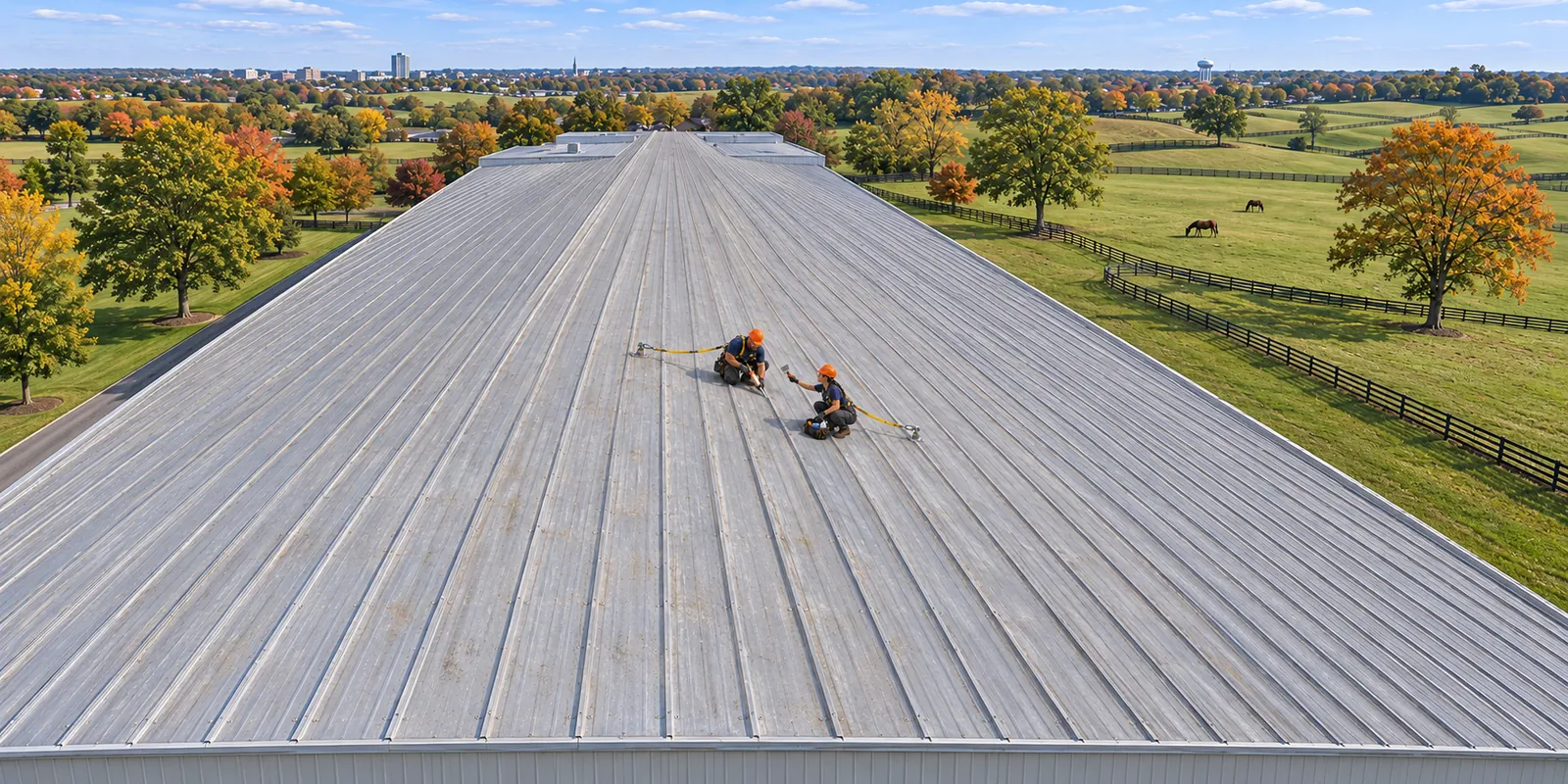
Metal warehouses and storage buildings on the same campus get fastener, lap, and panel repairs.
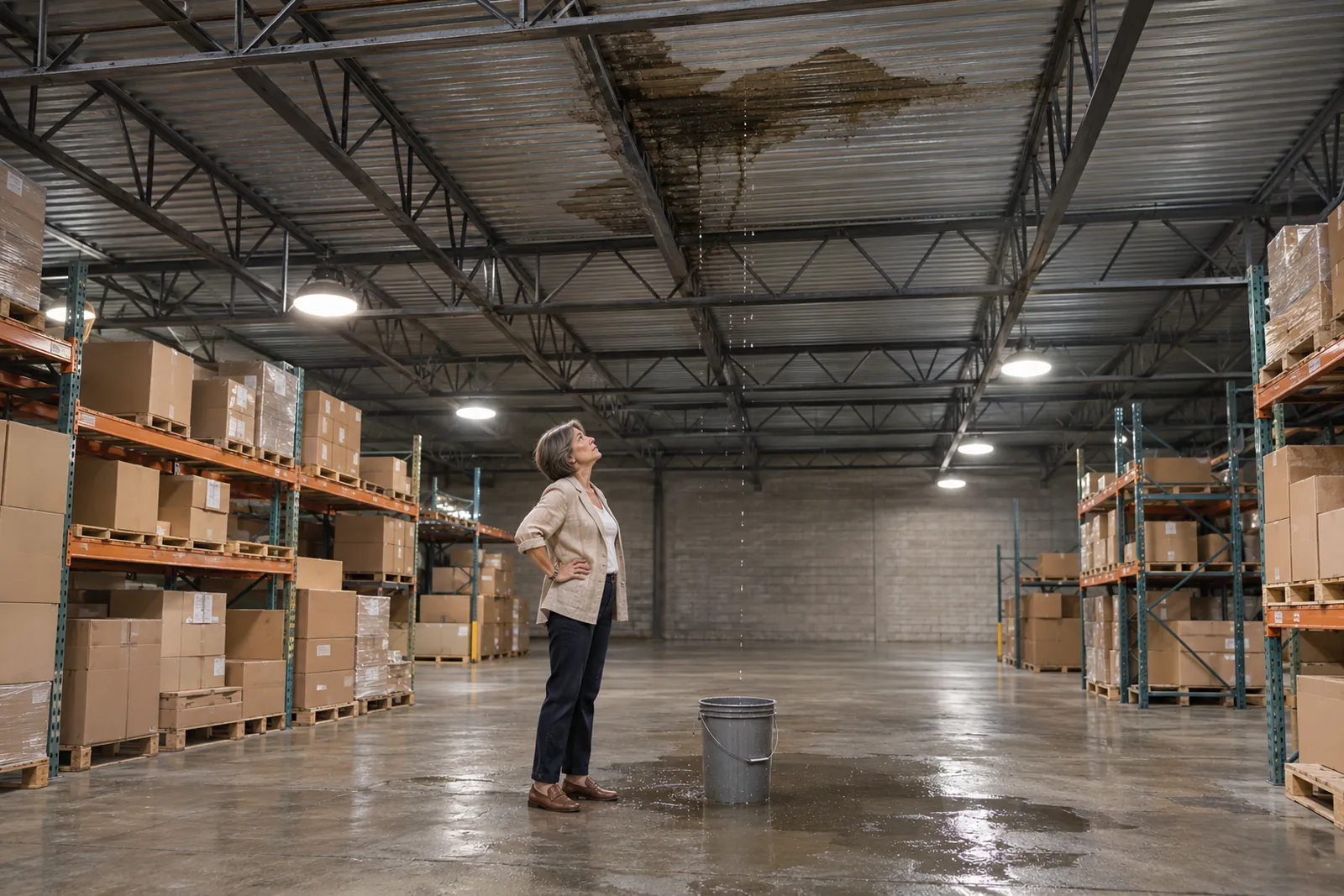
Hard-to-find drips over equipment get traced with hose tests and infrared before anything is cut.
Scheduling, exhaust damage, joints, foot traffic, and surveys.
Your maintenance and safety staff set the access times, hot work rules, and which areas can have crews overhead. The plan covers lockout of nearby fans, hot work permits, protection for lines below, and access routes that avoid process piping.
Shutdowns and weekends suit larger repairs, and smaller leak fixes happen during shifts once the area below is cleared or covered.
Grease, chemical residue, and hot discharge soften or crack membrane around the fan. Expect swollen or gummy EPDM near grease exhaust, brittle TPO where hot air blows across it, and corroded panels near acidic discharge.
Repairs use a grease-resistant sheet such as PVC, a sacrificial pad or containment box, and longer stacks where heat is the cause. The plant's safety data sheets help confirm which materials hold up.
Split bellows or covers get replaced, the joint flashing gets resealed, and the joint is checked to confirm it still moves as the building heats and cools. Torn bellows, stains in a line under the joint, and membrane stretched tight at the ends are the signs.
Long seam runs get probed end to end, since shrinkage opens them in sections.
Scuffed or punctured membrane gets patched, crushed insulation gets replaced, and walkway pads go down along the service paths. Damage gathers between the hatch and the units, where panels and tools get set down, and wherever cover board has crushed.
Heat-welded or adhered pads spread foot loads and mark the path. Crushed boards come out before the patch goes on.
Order one when leaks show up in several places, when the roof carries many past patches, or when soft spots spread past one detail. Infrared scans show warm wet areas at night, meters give readings on a grid, and core cuts show each layer.
The survey marks wet areas on a roof plan, so repairs replace exactly what is wet and each section gets the right call.
Tell us about the building, the roof type, and your shutdown windows. We handle industrial roof repair in Lexington, KY, section by section.
Want a call back about your roof?
Or call now: +1 (859) 204-8348