If Your Roof
Leaks Along a Straight Row of Screws Near the Eave
Cracked washers and stripped holes get oversized screws and new EPDM washers along that run.
Start WithFastener Repair
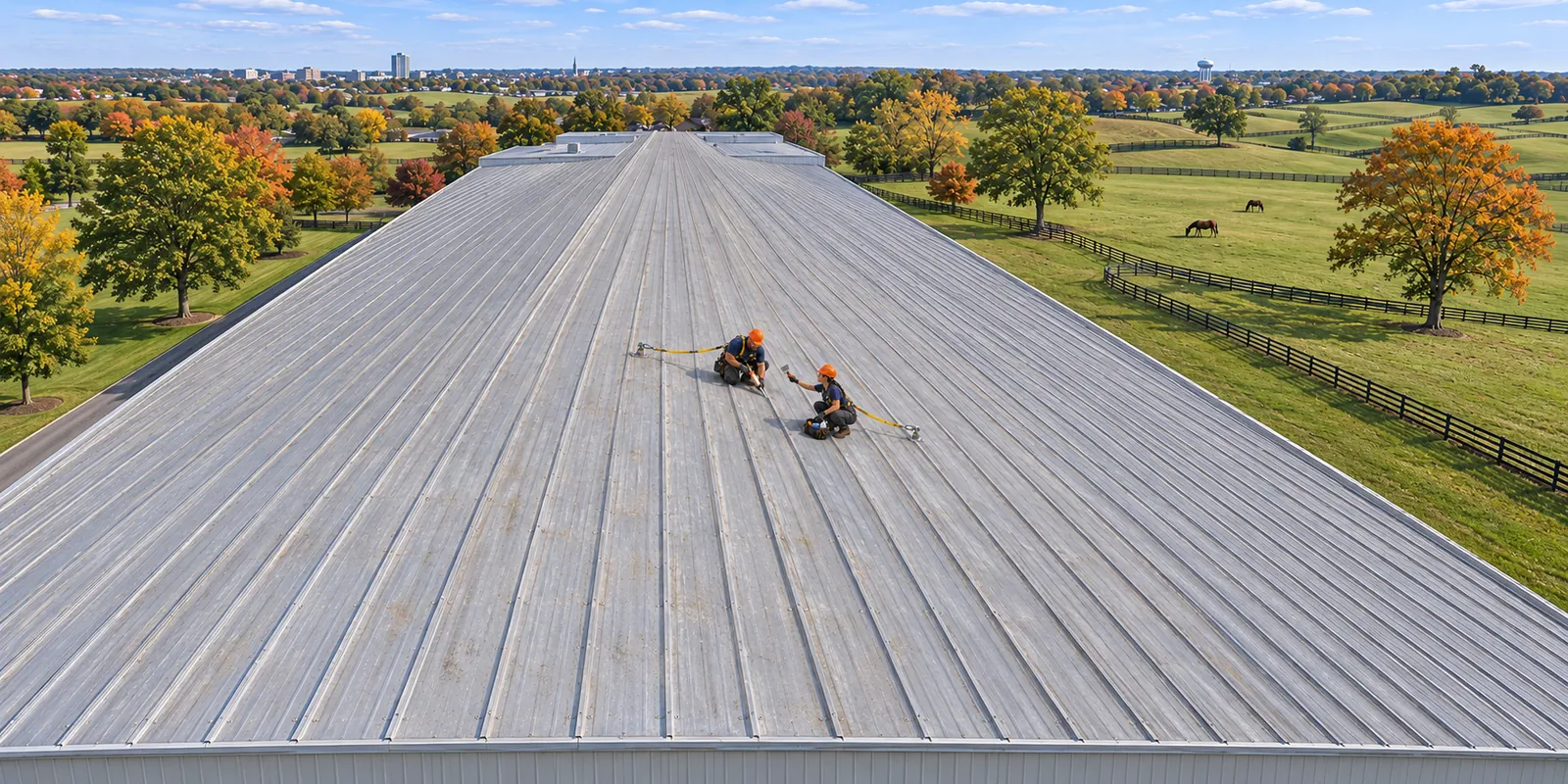
As a Lexington commercial metal roof repair contractor, we fix backed-out screws, leaking laps, rusted panels, and loose ridge caps on R-panel and standing seam roofs.
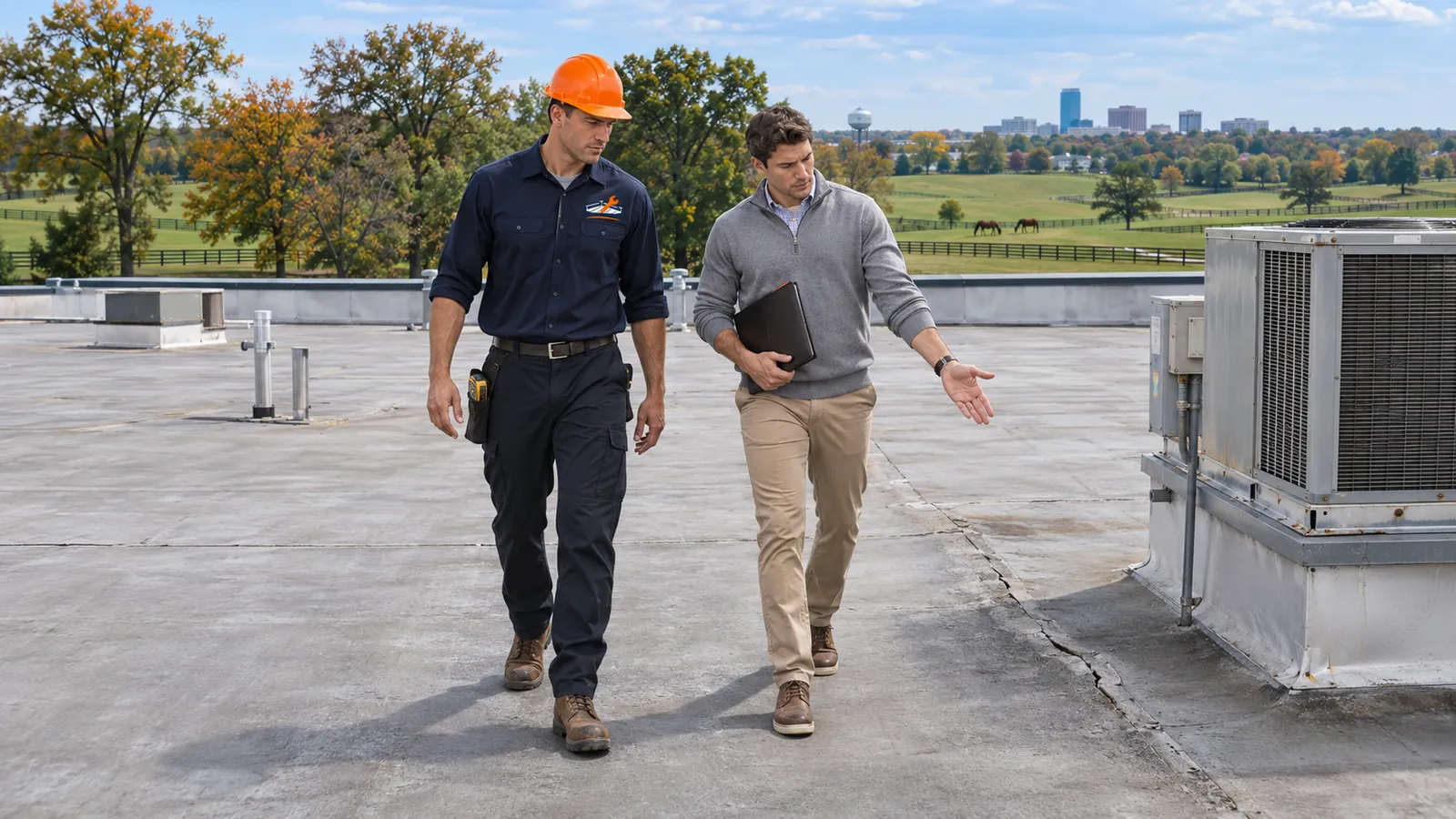
Steel that is still firm takes repairs well. A Lexington commercial metal roof repair contractor checks four things before choosing the fix.
Cracked washers and stripped holes get oversized screws and new EPDM washers along that run.
End laps get wire-brushed, sealed, stitch-screwed, and covered with reinforced tape bedded in sealant.
Pinholes get primed and patched, and rusted-through eave panels get replaced with sheets of the same profile.
Structure under the panels comes first, and widespread rust-through points to replacement planning.
Metal buildings move water along purlins and panel ribs, so the clue inside often sits downhill of the cause.
Drops land in a tidy line along a purlin, usually after windy storms.
Screw heads stand proud of the panel, and their washers have dried and split.
Water shows up mid-slope during heavy rain and stops when the rain eases.
The upper panel's lap has opened, and rain backs up under it from the panel below.
Orange staining runs down the inside of the eave wall.
Pinholes and flaking rust sit along the lowest panel edge and the gutter line.
Light and water come through one corner of the translucent sheet.
The skylight panel has yellowed, cracked, or lost its seal at the side laps.
Most metal roof leaks come from four places, and each gets its own fix.
Backed-out or stripped screws come out along each panel run, and the next larger diameter goes in so the threads bite fresh steel. Each head gets a new EPDM washer and a sealant cap.
Rust along the lap gets wire-brushed, stitch screws close the gap, sealant goes into the lap edge, and reinforced tape bedded in sealant covers the joint.
Through-rusted or crushed panels get swapped for new sheets after the crew measures rib spacing and height, and the purlin underneath gets checked before new screws go in.
Ridge caps get new foam closures and resealed fasteners. Cracked or yellowed skylight sheets get replaced with matching translucent panels, with screens over broken ones until then.
Upsizing fasteners and sealing laps keeps solid steel in service. Swapping only the rusted eave panels and gutters, where rust starts first, leaves the rest of the roof working as it was.
Steel that still holds a screw is worth keeping on the building.
Oversized screws reach fresh steel in old holes, and new washers seal each one.
Sealed and taped end laps keep heavy rain from backing up under the upper panel.
Barns, shops, and warehouses keep working, with the crew on the roof while the floor below stays in use.
A straight line of drips usually means failed washers along one panel run. Call us and we will check that run end to end.
Call UsMetal repairs follow the water downhill, then work back up to the cause.
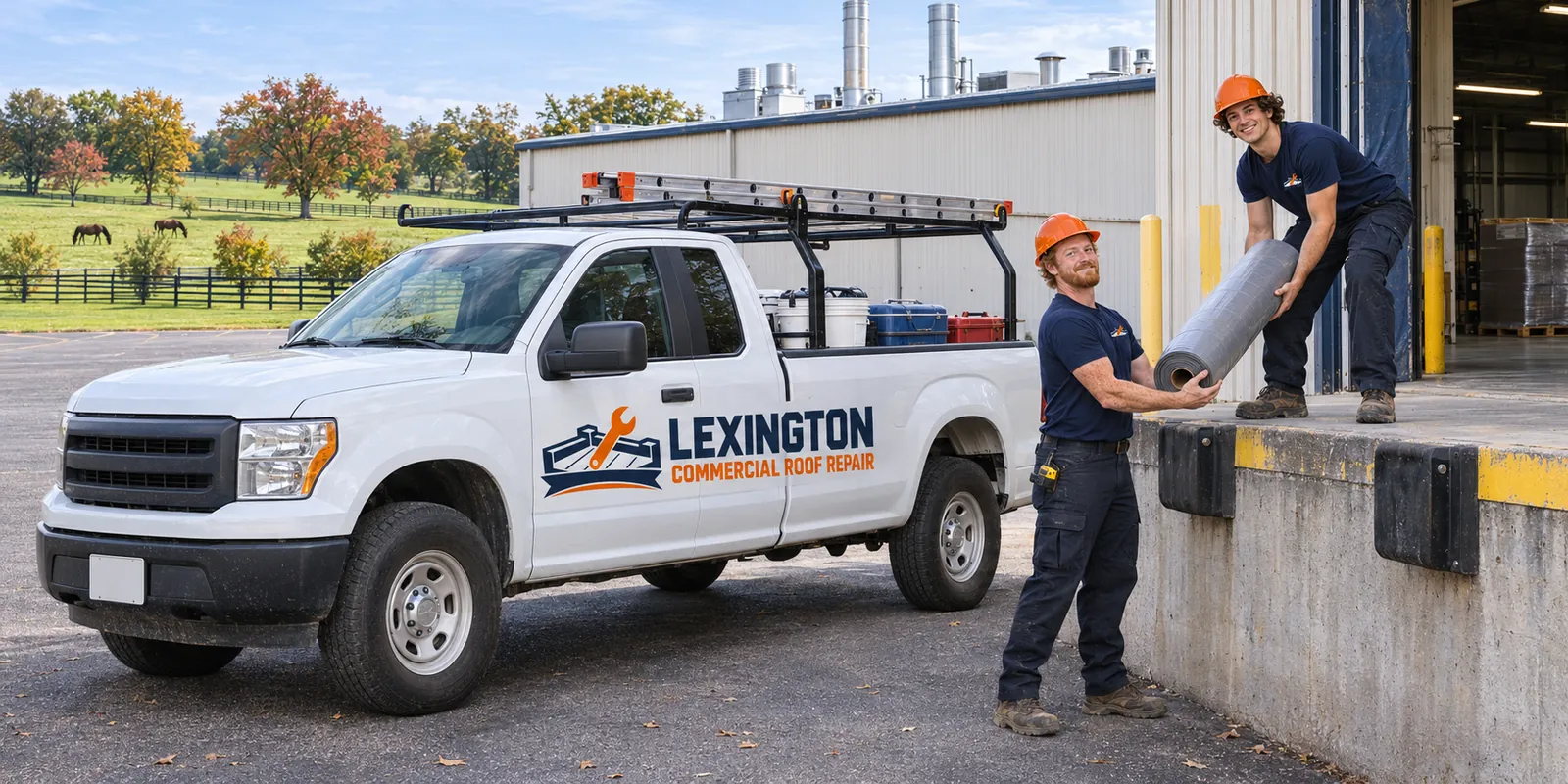
We walk each panel run above the leak, checking screw heads, end laps, ridge caps, skylights, and the eave line where rust starts.
Rusty screw holes get a look at the purlin beneath, because new fasteners need solid steel to grip.
Stripped and backed-out screws come out, and oversized screws with new EPDM washers go back in along the whole run.
Laps get cleaned of oil and rust, sealed with butyl or urethane, and covered with reinforced tape where water backs up.
Panels or gutter sections past repair get replaced with the same profile, then photos of every repair come to you.
Metal buildings often have a membrane office roof, a hidden leak, or plant equipment overhead.
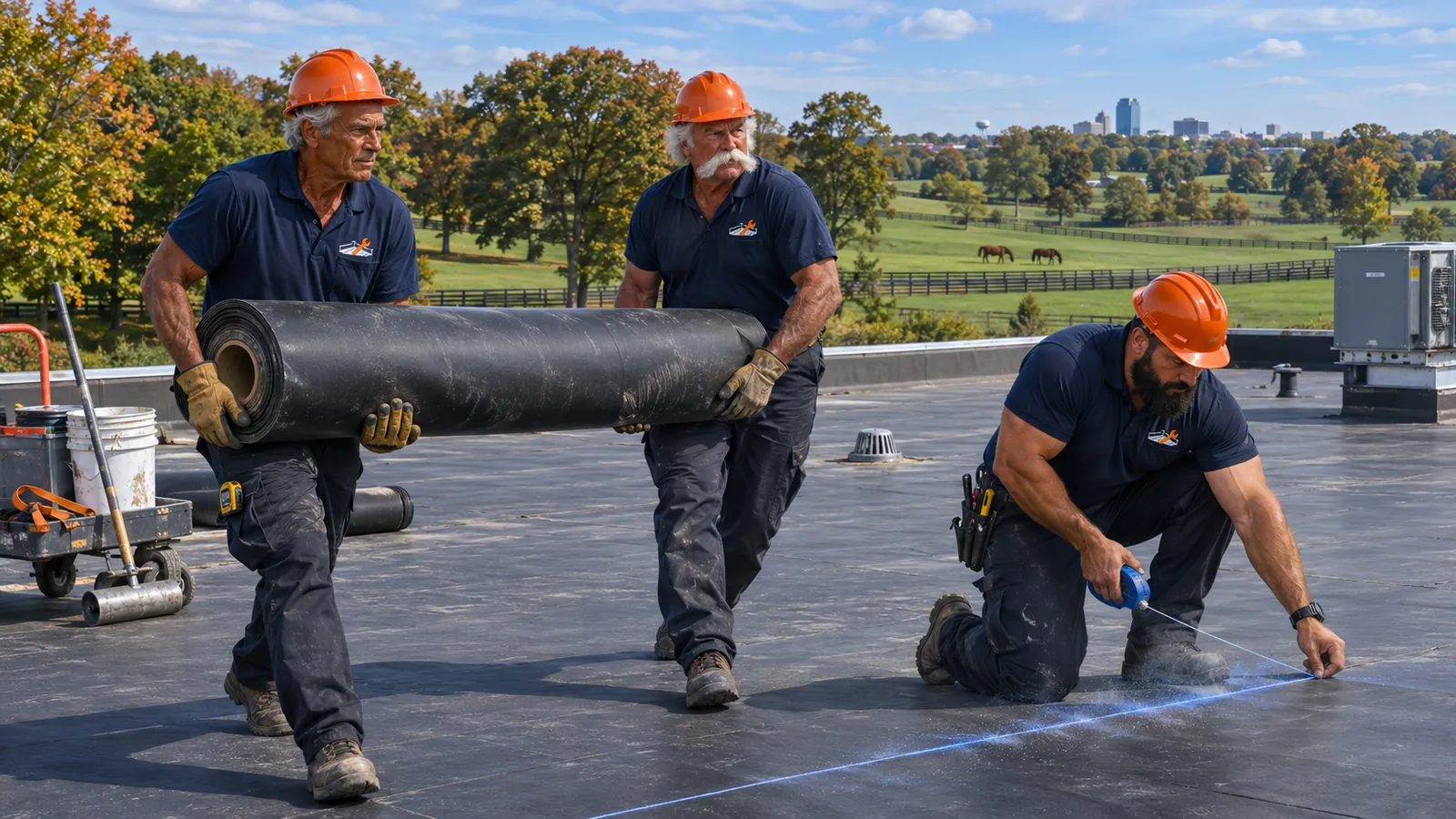
Membrane sections beside a metal building get seam, curb, and drain repairs with welded or taped material.
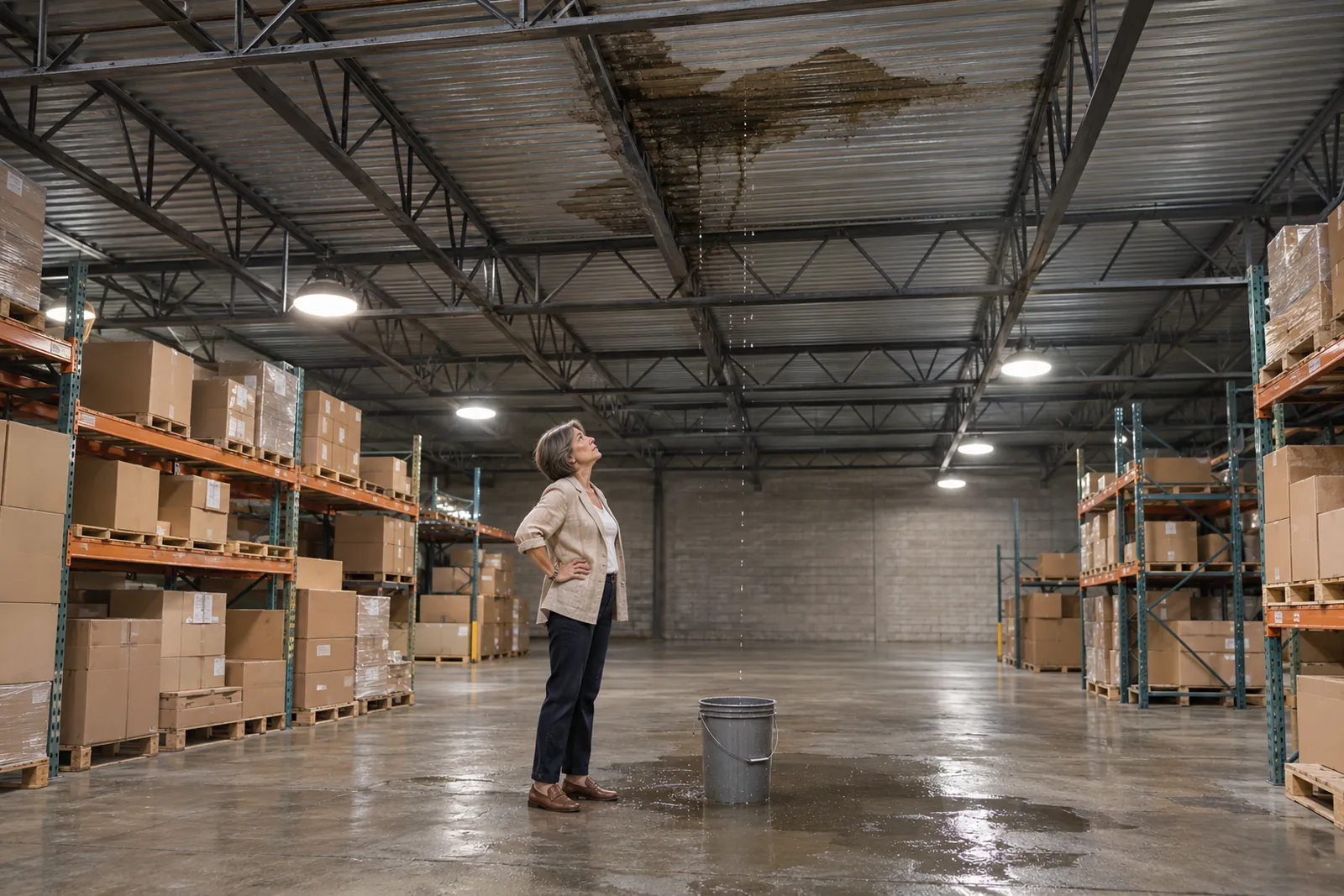
Water running along purlins can surface far from the bad lap, so tracing starts at the drip and works uphill.
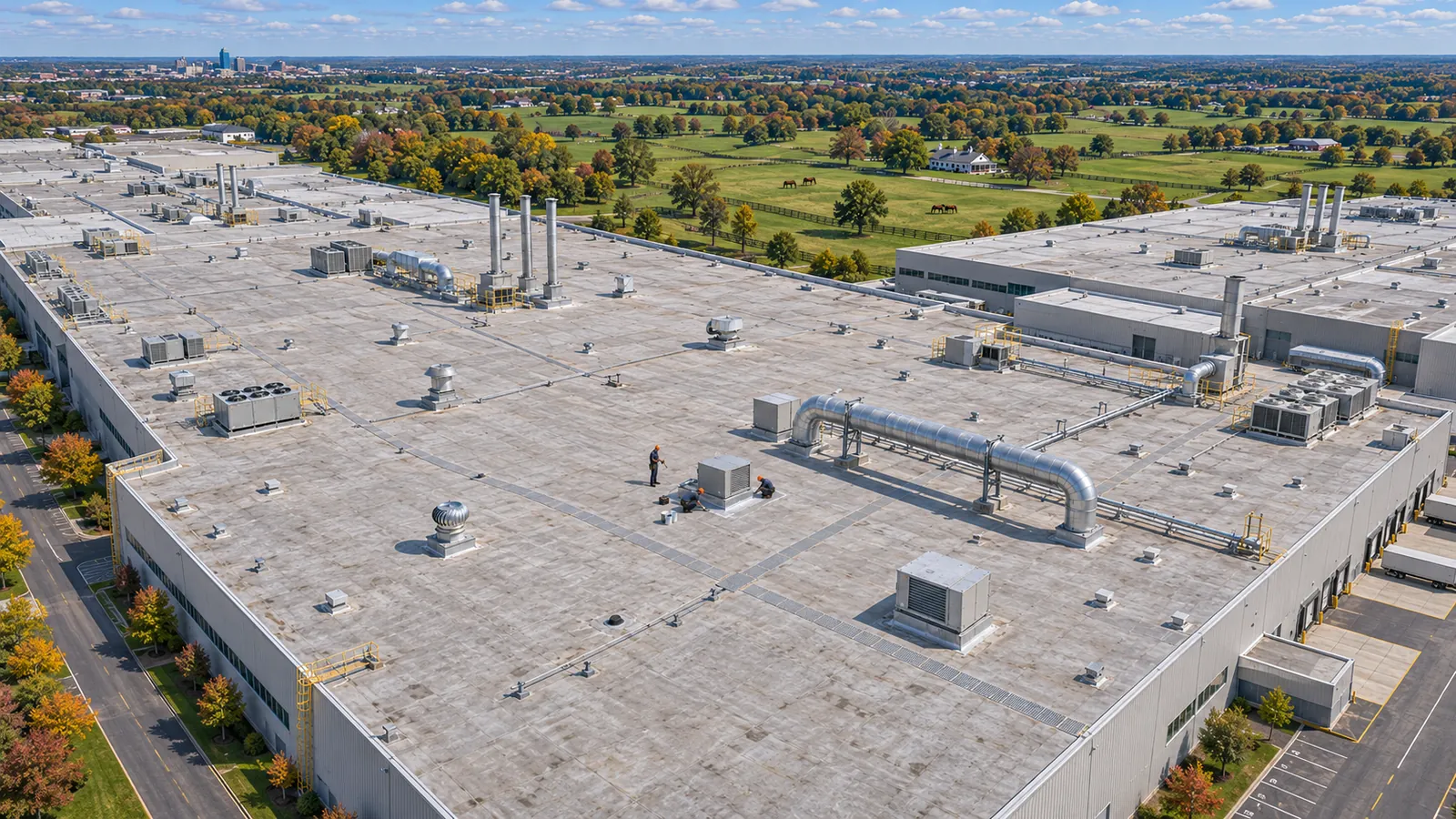
Plant buildings with acidic or hot exhaust get corroded panels, fasteners, and membrane around vents repaired.
Fasteners, laps, rust, and trim cause most metal roof calls.
Rubber washers dry out and crack, and panel movement loosens screws in their holes. The fix is the next larger screw diameter so the threads grab fresh steel, with a new washer under each head and sealant or a cap over it.
A leak along one straight row of screws, especially at the eave, points to fasteners more than panel damage.
Clean the joint, seal it with butyl or urethane, add stitch screws where it has opened, and cover it with reinforced tape or fabric. End laps leak more on low-slope metal because heavy rain backs up under the upper panel.
Side laps get the same treatment wherever wind-driven rain shows up along the ribs.
Surface rust on firm steel gets wire-brushed, primed, and sealed, and pinholes in a small area get a sealed metal or fabric patch. Wide rust-through, or a crushed or torn panel, calls for a new sheet of the same profile and a check of the purlin under it.
Gutters and eave panels rust first and deserve the closest look.
Metal repairs center on fasteners, laps, and rust, while membrane repairs center on seams, flashing, and punctures. Metal hides damage in rusted purlins and moves with heat that works screws loose, and membrane hides wet insulation and shrinks at seams and corners.
Mixing materials causes trouble. Silicone caulk on a metal lap or asphalt cement on a TPO seam blocks the bond of the permanent repair.
Ridge caps get new foam closures, resealed fasteners, and taped laps. Wall and curb flashing gets refastened, resealed, and tucked under counterflashing, and cracked skylight panels get matching translucent sheets sealed at every lap.
Gutters get cleared, resealed at seams and end caps, and rehung to pitch. Rusted-through gutter sections are replaced outright.
Tell us the panel type and where the drips land. We will check the screws, laps, and trim and fix what failed.
Want a call back about your roof?
Or call now: +1 (859) 204-8348