If Your Roof
Leaks Only During Wind-Driven Rain From One Side
That pattern points to wall flashing, coping joints, or side laps facing the storm.
Start WithFlashing And Coping

Call a Lexington commercial roof leak repair contractor when the drip is easy to find and the source is hidden. We trace water uphill and fix where it enters.
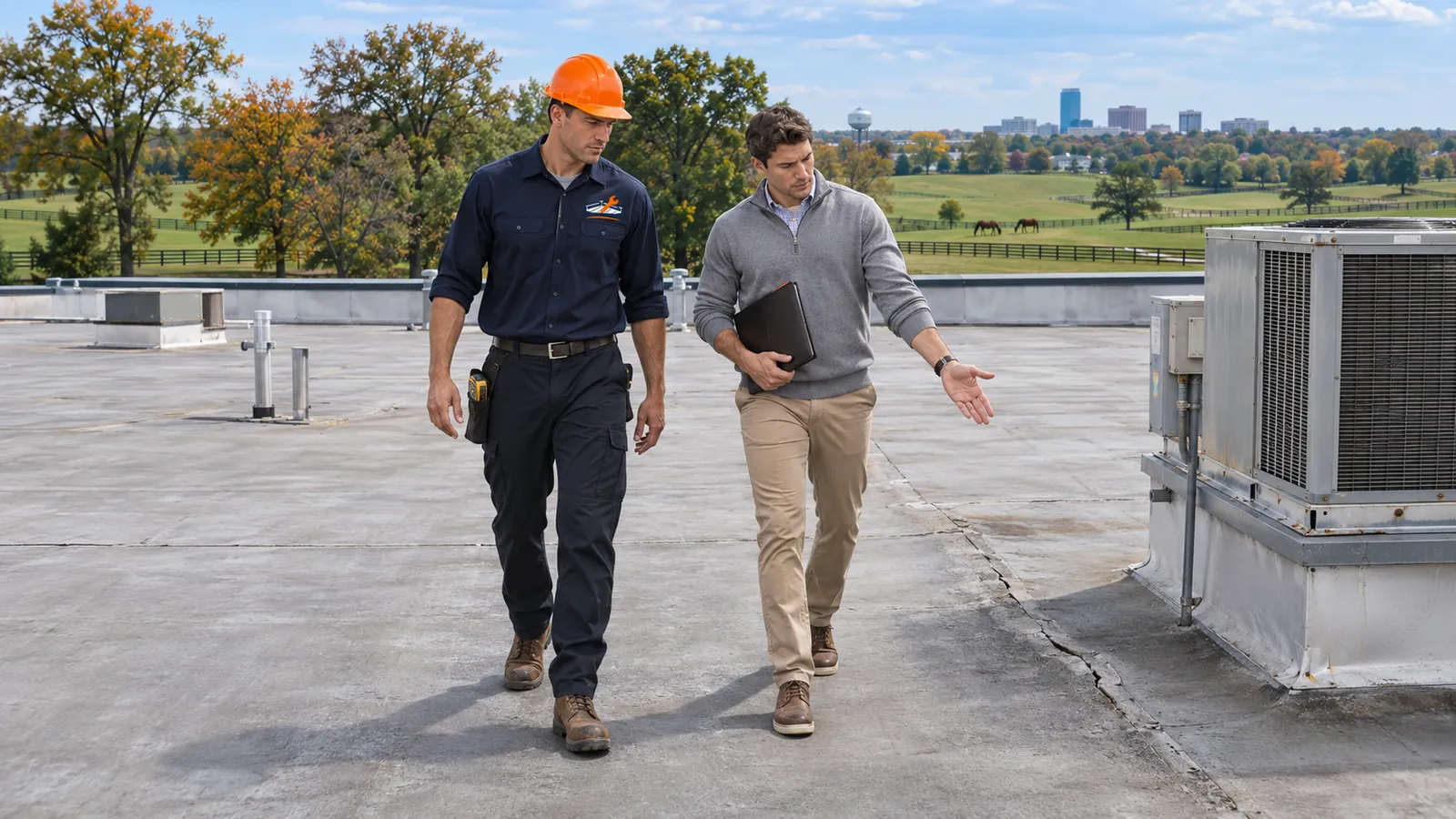
Most leaks come from one failed detail. A Lexington commercial roof leak repair contractor confirms that before treating it as one.
That pattern points to wall flashing, coping joints, or side laps facing the storm.
Curb flashing, pitch pans, and condensate lines get checked, and the HVAC contractor looks inside the cabinet.
Overflowing drains, scuppers, or gutters are the usual cause, so clearing them comes before any patch.
A moisture survey maps wet insulation, since spreading leaks point to a roof that needs more than spot work.
Water travels before it falls, so the drip and the source can sit several feet apart.
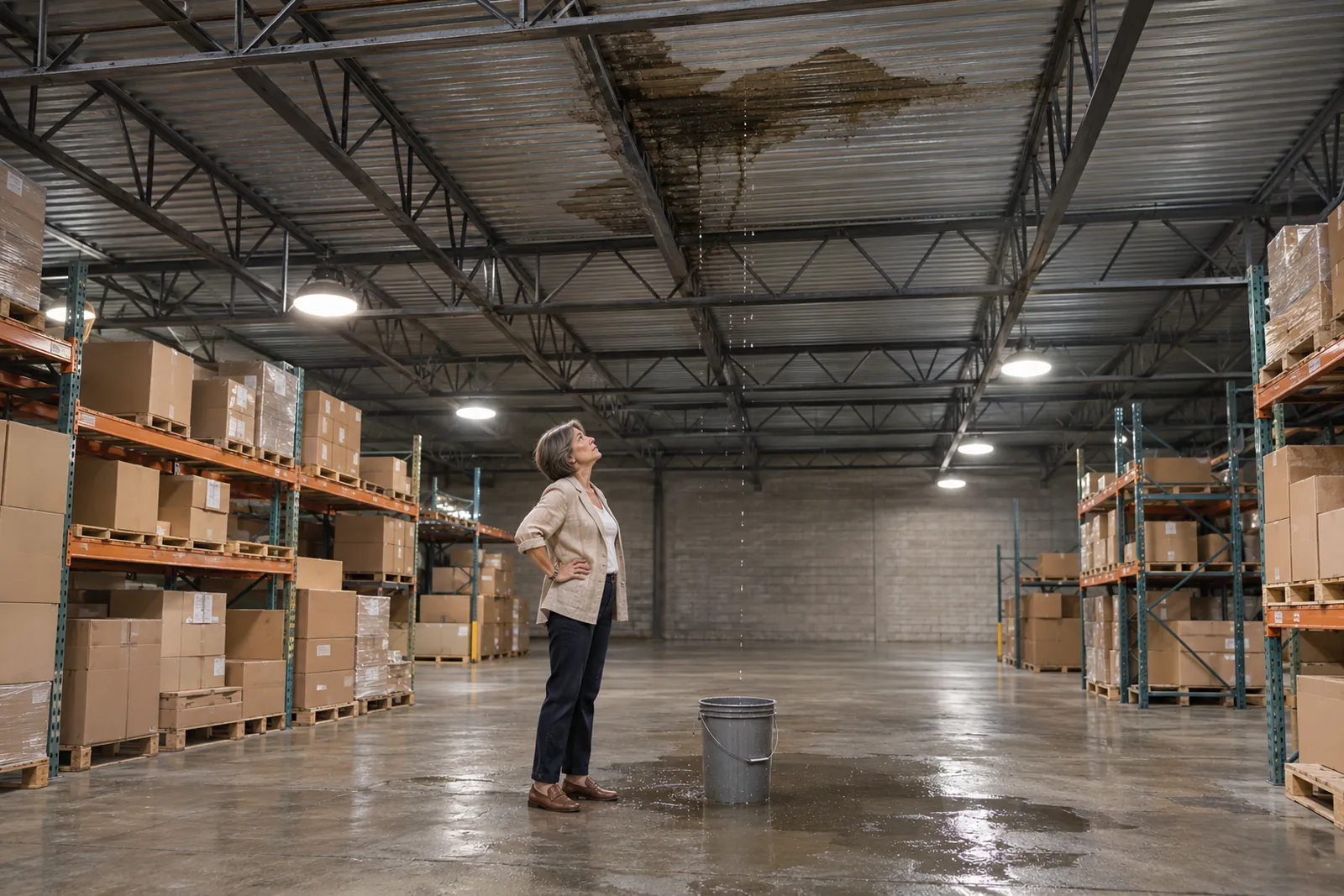
A single drip lands in open floor space far from any wall.
Water runs along the steel deck flutes from a seam or penetration in line with the drip.
Tiles darken next to a duct drop after the cooling runs.
A cracked pitch pan, an open curb corner, or a condensate line dripping onto the roof.
Damp drywall or white mineral streaks appear high on an exterior wall.
Coping joints let rain into the parapet, which sends it down inside the wall.
Water appears in downpours and stays dry the rest of the time.
Drains or gutters overflow, pushing water over flashing that handles normal rain.
The fix depends on where the water entered and on whether the roof is dry yet.
The drip gets marked inside and measured to a roof landmark such as a curb or drain. Flood or hose tests then run one area at a time, starting low and moving up.
Curb flashing gets replaced and tucked under new counterflashing. Pitch pans are emptied and refilled, or swapped for a pipe boot, and cracked boots get replaced at the clamp.
During a storm the job is temporary: cleared drains, repair tape or a tarp over the opening, and water steered away. The permanent repair waits for a dry surface.
TPO leaks at seam edges and curb corners, EPDM at seam tape edges and wall flashing, built-up at blisters and parapet bases, and R-panel metal at fasteners and end laps.
Patching the spot above the drip misses leaks that travel along the deck. Tracing first puts the repair where water actually enters, so the same stain stays gone after the next storm.
Finding the real entry point means the repair stays fixed.
Photos of the source and the finished repair go into your file, which helps when an adjuster asks after a storm.
Leaks that turn out to start inside a unit cabinet get handed to the HVAC contractor quickly.
Each traced leak is marked on a roof plan, so repeat trouble at one curb or drain stands out.
A leak that keeps returning to one spot was patched in the wrong place or with the wrong material. Get a visit that traces it back first.
Get A Free EstimateTracing runs from the inside out, then from low on the roof to high.
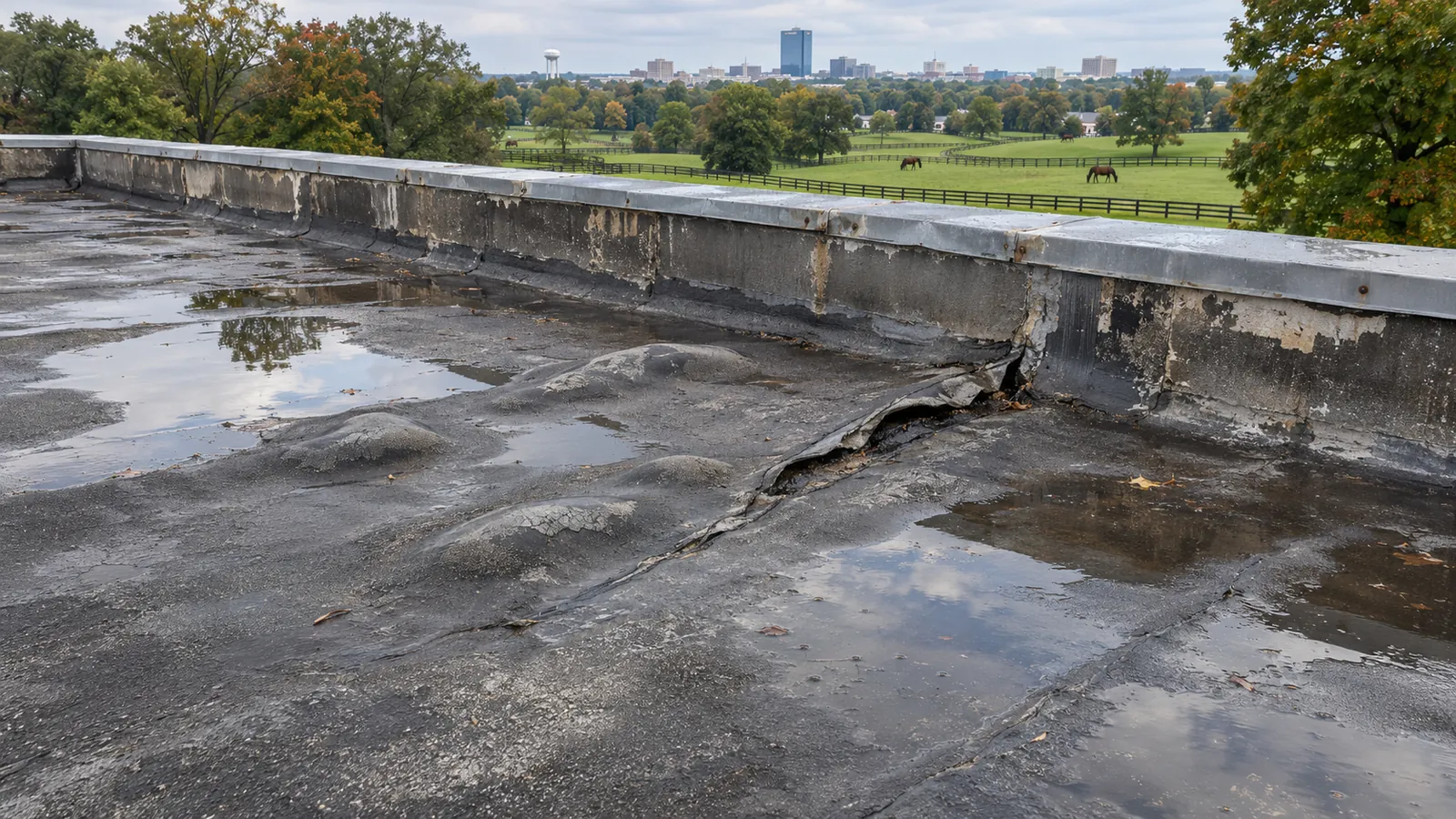
We start at the drip, mark it on your floor plan with the date and weather, and measure it to a curb, drain, or wall above.
An infrared scan shows wet insulation under the membrane, and probing checks seams and flashing near the measured spot.
Water goes on one small area at a time, starting low and moving up, until someone inside sees the drip return.
A wet roof gets a marked temporary seal. On a dry day the permanent repair goes on and the temporary material comes off.
Photos of the entry point and the repair go to you, with the spot added to your roof plan.
Once the source is found, the fix belongs to one of these.

Leaks traced to a lifted seam or split base flashing end with a welded or taped membrane repair.
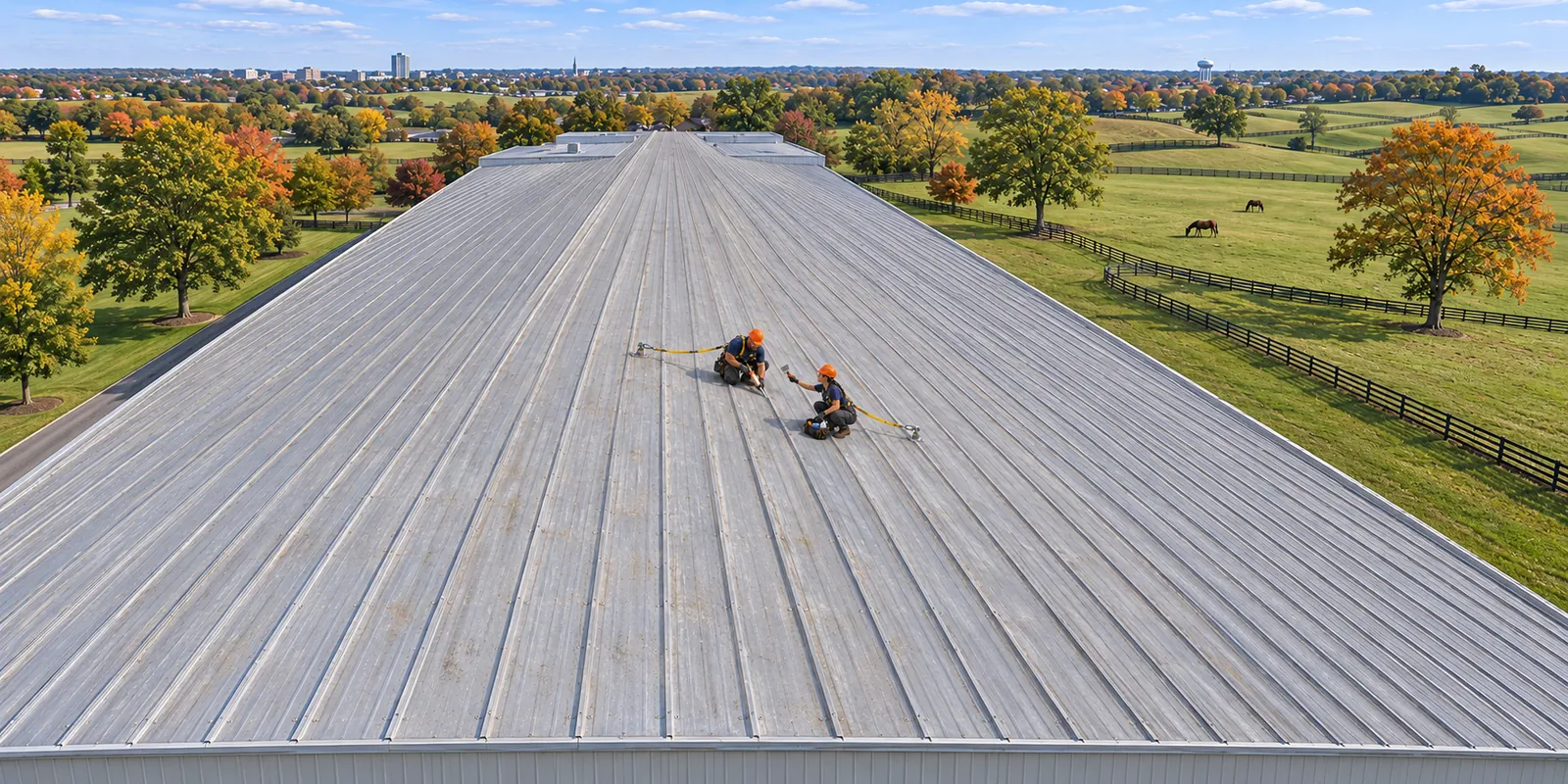
Drips traced to screws, end laps, or ridge caps on a metal building end with fastener and lap work.
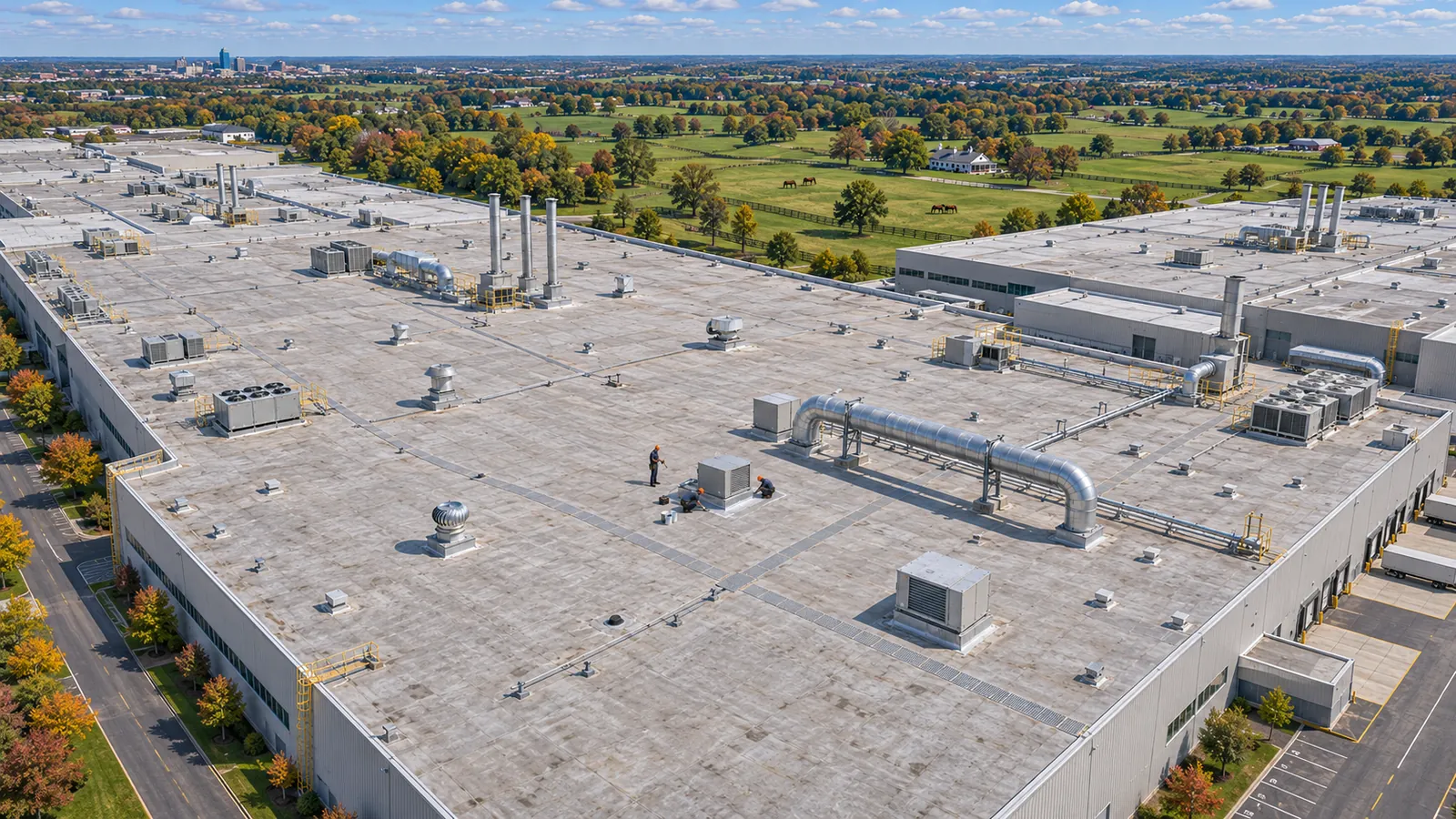
Plant leaks over production lines get repairs timed with maintenance staff and covered work areas.
Answers on tracing, sources, and what to do inside while you wait.
Work uphill from the drip along the deck, purlins, or insulation joints, since water often travels several feet before it falls. Mark the drip, measure to a curb or drain, run flood or hose tests one area at a time, and probe nearby seams.
On steel decks the source often sits in line with the drip along the flutes. On metal buildings water runs along purlins toward the eave.
Each roof has its usual suspects. TPO and PVC leak at seam edges, curb corners, pipe boots, and edge metal, EPDM at seam tape edges and wall flashing, and built-up or modified bitumen at blisters, cracked flashing, parapet bases, and drains.
R-panel metal leaks at fasteners, end laps, ridge caps, and skylight laps. Rooftop units show up on every list.
Move stored goods and equipment away, catch the water, and photograph the damage. Put a bucket or tarp funnel under the drip, shut off power to lights or equipment near wet areas, and pull soaked ceiling tiles before they fall.
Mark the spot on a floor plan with the date and weather. Notes on light rain, heavy rain, or wind from one direction help narrow the source.
Curbs get reflashed with new membrane and finished under new counterflashing, and condensate lines that drip onto the roof get rerouted. Pitch pans are emptied, refilled with fresh sealer, and capped, or replaced with a pipe boot.
Pitch pans shrink away from pipes, so check them every season. Water inside a unit cabinet can pass for a roof leak, which is why the HVAC contractor checks drain pans.
Only temporarily. Membranes, primers, and sealants bond poorly to wet surfaces, so storm work means clearing clogged drains and scuppers, covering open seams with repair tape or a tarp, and steering water away from the active leak.
Once the roof dries, the temporary material comes off and the permanent repair goes on. Walking a wet roof is dangerous, so safety decides what happens during a storm.
Send the drip location and when it leaks. We handle commercial roof leak repair in Lexington, KY, from tracing to the final photo.
Want a call back about your roof?
Or call now: +1 (859) 204-8348