
Commercial Roof Repair Questions in Lexington

Get Answers on Open Seams, Loose Screws, and Clogged Drains

These commercial roof repair questions in Lexington cover flat, metal, leak, and plant roof repairs, plus weather, permits, cost, and each area we serve.

  • Owner Answers
  • Local Permit Offices
  • Leak Tracing
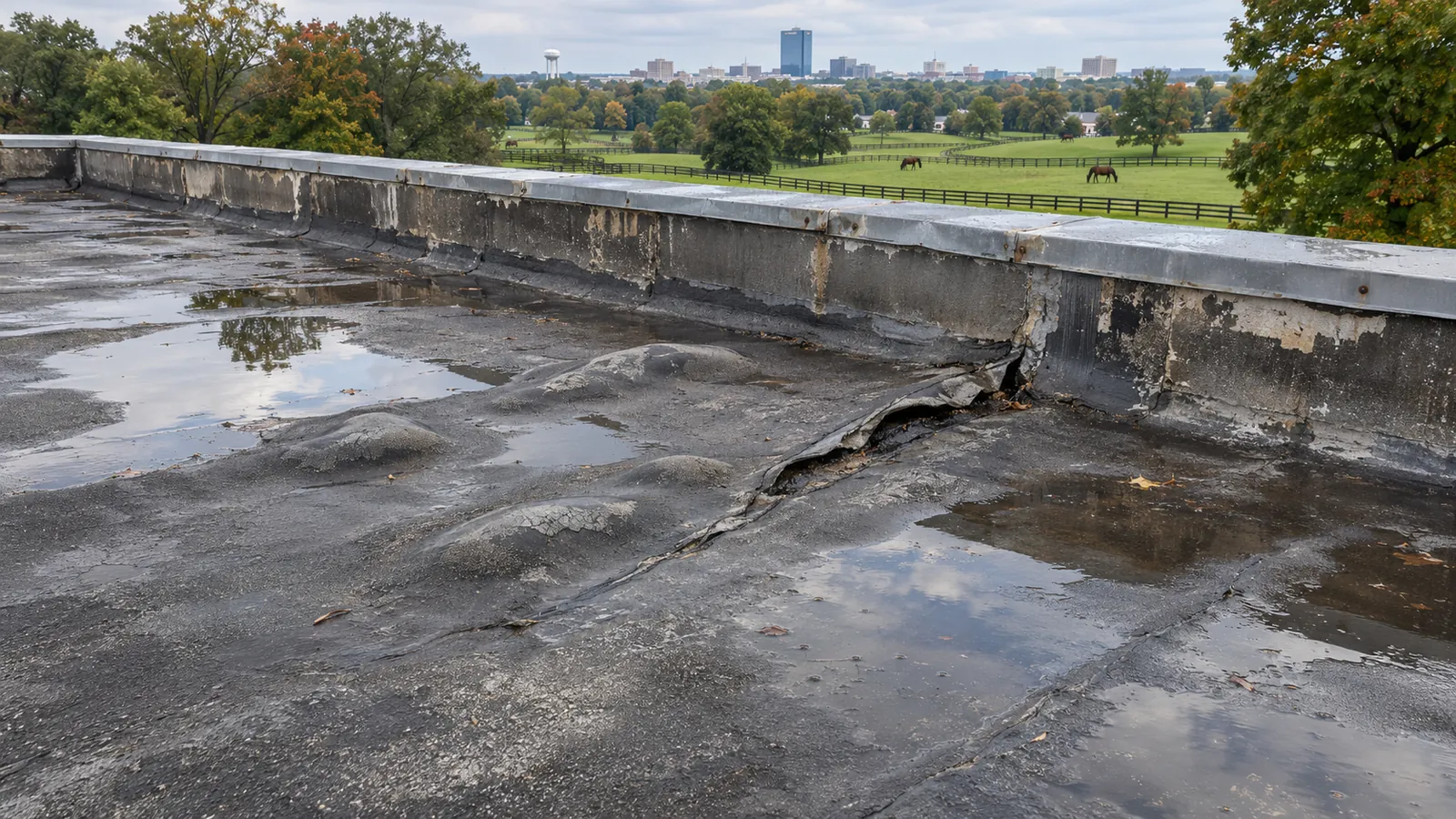
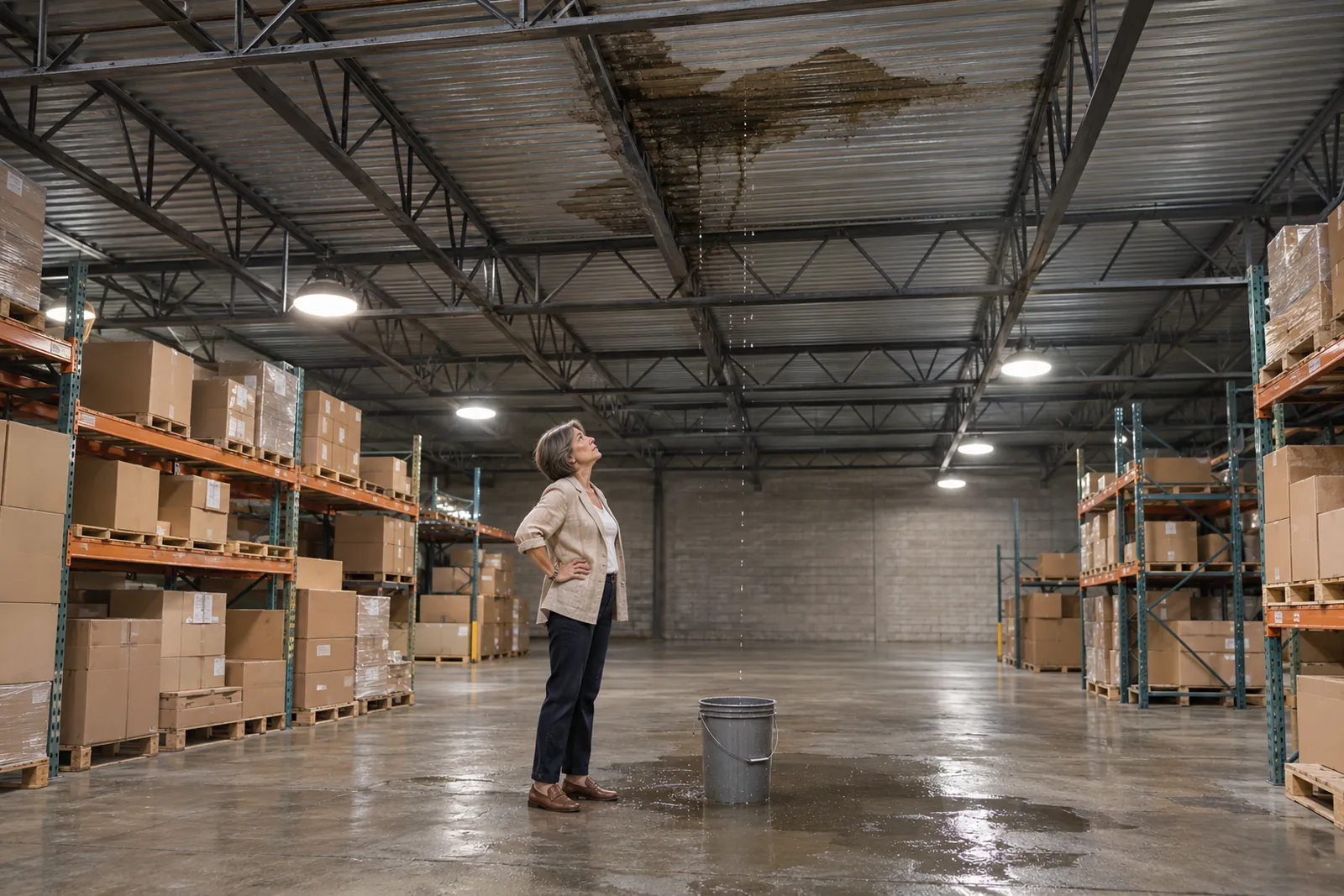
Roofer checking a commercial roof surface in Lexington, KYRoof leak showing through a ceiling inside a commercial building

Commercial Roof Repair Questions in Lexington, by Topic

Every answer below comes from the owner's FAQ, grouped by roof type and topic, so these commercial roof repair questions in Lexington are easy to scan.

Commercial roof repair is the work of finding and fixing leaks, open seams, torn membrane, loose flashing, and worn metal panels on business, industrial, and farm buildings while the rest of the roof stays in service. Lexington Commercial Roof Repair fixes flat, metal, and industrial roofs across Lexington and Fayette County, Kentucky, plus surrounding towns including Paris, Versailles, and Hamburg.

Commercial Roof Repair Basics

When Is a Commercial Roof Repaired, Restored, or Replaced?

Repair fits a roof with damage in a few spots, restoration fits a roof that is worn across its surface but dry underneath, and replacement fits a roof with widespread wet insulation or a failing deck.

PathWork involvedSigns it fits
RepairPatch seams, reflash curbs, fix drains, swap fastenersLeaks traced to a handful of details
RestoreRepairs plus a full-surface coating over the membrane or panelsWeathered surface, dry insulation, sound attachment
ReplaceTear off to the deck and install a new roofWet insulation across large areas, rusted deck, repeated failures

An infrared scan or a few core cuts tell which row a roof belongs in. Owners who keep a log of each leak location see the pattern sooner.

Repair, restore, or replace: our services

What Are the Early Signs That a Commercial Roof Needs Repair?

Ceiling stains, damp insulation, and water dripping from a deck seam are the signs most owners notice first, though the roof usually shows trouble before the inside does.

Things a roof walk turns up early:

  • Seams lifting at the edges on TPO or EPDM sheets.
  • Blisters or soft spots underfoot near drains.
  • Flashing pulling away from parapet walls and curbs.
  • Screw heads backing out of metal panels.
  • Standing water two days after rain.

Catching these on a spring and fall walk keeps a seam repair from turning into a section of wet insulation. Photos taken on each walk give a record to compare against.

Is a Temporary Patch Enough, or Does the Roof Need a Permanent Repair?

A temporary patch stops water for now, and a permanent repair rebuilds the failed detail with materials that match the roof system.

FactorTemporary patchPermanent repair
PurposeStop active leaking during or after a stormFix the cause at the seam, flashing, or panel
MaterialsRoof cement, temporary repair tape, tarpsMembrane welded or taped in, new flashing, new fasteners
Surface prepMinimal, often on a wet roofCleaned, dried, and primed
Expected serviceUntil the permanent repairMatched to the surrounding roof

Mastic smeared over a TPO seam, for example, holds briefly and then makes the later weld harder. Temporary work gets marked so it is redone once the roof is dry.

Flat Roof Repair Questions

Which Flat Roof Problems Can Be Repaired Instead of Replaced?

Most flat roof problems confined to seams, flashing, drains, and small punctures can be repaired, as long as the insulation around them is dry.

Repairable problems on a low-slope roof:

  • Open or fishmouthed seams on single-ply membrane.
  • Split flashing at parapet walls and rooftop curbs.
  • Punctures from dropped tools or hail.
  • Loose edge metal or coping caps.
  • Clogged or cracked drain bowls.

Wet insulation beyond the repair area, a deck that sags between joists, or leaks in many places at once push the roof toward restoration or replacement. A core cut next to the leak settles the question for that spot.

Flat roof repair in Lexington

What Is the Repair for an Open Seam on TPO, EPDM, or Modified Bitumen?

Open seams are repaired with methods matched to the membrane, since each roof type bonds in its own way.

MembraneSeam repair method
TPOClean and prep the old sheet, then hot-air weld a cover strip over the open lap
EPDMClean, prime, and apply seam tape or a pressure-sensitive cover strip
PVCClean and hot-air weld, with a solvent wipe on weathered sheets
Modified bitumenHeat or cold-apply a new cap sheet strip over the lap

Old TPO can resist new welds, so repair crews test-weld a scrap first. A seam that opens again right next to a repair often points to shrinkage pulling the whole sheet, a sign the field needs more attention.

Should Blisters on a Flat Roof Be Cut Open or Left Alone?

Small, firm blisters on a built-up or modified bitumen roof are often monitored, while blisters that are soft, growing, cracked, or near seams get cut, dried, and patched.

Summer heat makes moisture or air trapped between the plies expand, and that is what raises a blister. Steps for a blister repair:

  1. Cut an X across the blister and fold back the flaps.
  2. Let the underlying layer dry.
  3. Set the flaps back in roofing cement or hot asphalt.
  4. Cover the area with a patch larger than the cut.

Clusters of blisters across a wide area point to moisture inside the roof, which calls for a moisture survey before more patches go on.

How Is Ponding Water Fixed on an Existing Flat Roof?

Ponding on an existing flat roof is fixed by clearing the drains first, then adding tapered crickets or saddles that push water off the low spots.

Common fixes, in the order crews try them:

  • Clean drain strainers and snake drain lines.
  • Lower or reset drain bowls that sit above the membrane.
  • Add tapered insulation crickets behind rooftop units and between drains.
  • Cut in an added drain or scupper where the structure allows.

Ponding near a column line or mid-span can mean a deflected deck, and an engineer checks that before any added weight goes on. Water that clears within two days after rain is normal on most low-slope roofs.

How Are Punctures and Torn Membrane Patched?

Punctures and tears in membrane are patched by cleaning the area, cutting a rounded patch of matching membrane, and welding or taping it in place with a few inches of overlap on every side.

Repair sequence on a single-ply roof:

  1. Probe around the hole for wet insulation.
  2. Replace any soaked boards under the hole.
  3. Clean and prep the membrane around it.
  4. Weld or tape a round-cornered patch over the damage.

Rounded corners keep the patch from peeling. A cluster of punctures along a path to rooftop units shows where walkway pads belong.

Commercial Metal Roof Repair Questions

Why Do Screws on a Metal Roof Leak, and How Are They Fixed?

Screws on a metal roof leak when their rubber washers dry out and crack, or when panel movement loosens them in their holes. Repair crews replace them with the next larger screw diameter so the threads bite fresh steel, then set a new washer under each head.

Fastener repair on an R-panel roof:

  • Remove backed-out or stripped screws along each panel run.
  • Drive oversized screws with new EPDM washers.
  • Seal each head with compatible sealant or a fastener cap.
  • Check purlins under rusty holes before driving new screws.

Leaks along a straight row of screws, especially at the eave, point to fastener trouble more than panel damage.

Metal roof repair in Lexington

How Are Leaking End Laps and Side Laps Repaired on Metal Roofs?

Leaking laps on a metal roof are repaired by cleaning the joint, sealing it with butyl or urethane sealant, adding stitch screws where the lap has opened, and covering it with reinforced seam tape or fabric.

End laps cause more leaks than side laps on low-slope metal roofs, since water backs up under the upper panel during heavy rain. Repair steps include:

  1. Wire-brush rust along the lap.
  2. Tighten or add stitch screws to close the gap.
  3. Apply sealant into the lap edge.
  4. Cover the lap with reinforced tape or fabric bedded in sealant.

Side laps get the same steps wherever wind-driven rain shows up along the panel ribs.

When Does a Rusted Metal Roof Panel Need Replacing Instead of Repair?

Surface rust on metal roof panels is repaired by wire-brushing, priming, and sealing, while panels rusted through or crushed get replaced with new sheets of the same profile.

ConditionRepair approach
Surface rust, firm steelWire-brush, prime, seal
Pinholes in a small areaPrime and cover with a sealed metal or fabric patch
Rust-through over a wide areaReplace the panel
Crushed or torn panelReplace the panel and check the purlin under it

Panel swaps on an old roof need a profile match, so the crew measures rib spacing and height before ordering. Gutters and eave panels rust first and deserve the closest look.

How Do Metal Roof Repairs Differ From Membrane Roof Repairs?

Metal roof repairs focus on fasteners, laps, and rust, while membrane roof repairs focus on seams, flashing, and punctures in the sheet.

Repair areaMetal roofMembrane roof
Common leak pointFasteners and end lapsSeams and curb flashing
Repair materialOversized screws, sealant, panelsMatching membrane, seam tape, welded patches
Surface prepWire-brush rust, clean oilClean and prime, dry the sheet
Movement concernThermal expansion working screws looseShrinkage pulling seams and corners
Hidden damageRusted purlinsWet insulation

Mixing materials causes trouble. Asphalt cement on a TPO seam or silicone caulk smeared across a metal lap both block the bond of the permanent repair.

What Gets Fixed at Ridge Caps, Flashing, Skylights, and Gutters on a Metal Roof?

Ridge caps, wall and curb flashing, skylight panels, and gutters are four of the most frequent leak points on a metal roof, and each gets its own repair.

  • Ridge caps get new foam closures, resealed fasteners, and taped laps where wind-driven rain enters.
  • Wall and curb flashing gets refastened, resealed, and tucked back under counterflashing where it has pulled loose.
  • Skylight panels that are cracked or yellowed get replaced with matching translucent sheets, sealed at every lap.
  • Gutters get cleared, resealed at seams and end caps, and rehung to a steady pitch.

Rusted-through gutter sections are replaced rather than patched. Broken skylight panels are also a fall hazard, so screens go over them until they are fixed.

Commercial Roof Leak Repair Questions

How Is a Leak Traced When the Drip Is Far From the Source?

Leaks are traced by working uphill from the drip along the deck, purlins, or insulation joints, since water often travels several feet before it falls into the building.

Tracing methods crews use:

  • Marking the drip inside and measuring to a roof landmark such as a curb or drain.
  • Flood or hose testing one area at a time, starting low and moving up.
  • Infrared scans that show wet insulation under the membrane.
  • Probing seams and flashing near the measured spot.

Water on steel decks runs along the flutes, so the source is often in line with the drip. On metal buildings it runs along the purlins toward the eave.

Roof leak repair in Lexington

Where Do Leaks Start on Each Type of Commercial Roof?

Each roof type has its own set of common leak sources, and the first look goes to those spots.

Roof typeCommon leak sources
TPO or PVCSeam edges, curb corners, pipe boots, edge metal
EPDMSeam tape edges, flashing at walls, shrinkage at corners
Modified bitumen or built-upBlisters, cracked flashing, base of parapets, drains
Metal R-panelFasteners, end laps, ridge caps, skylight laps
Standing seamTrim at walls, pipe boots, seam ends at eaves

Rooftop units appear on every list because their curbs, condensate lines, and access panels break up the roof surface. Parapet walls also leak through coping joints, which sends water down inside the wall rather than through the roof.

What Should Be Done Inside the Building While a Leak Waits for Repair?

Moving stored goods and equipment away from the drip, catching the water, and photographing the damage are the first steps inside while a leak waits for repair.

Inside checklist:

  • Place buckets or a tarp funnel under the drip.
  • Shut off power to lights or equipment near wet areas.
  • Mark the drip spot on the floor plan with the date and weather.
  • Remove soaked ceiling tiles before they fall.

Notes on whether the leak shows during light rain, heavy rain, or wind-driven rain from one direction narrow down the source on the roof.

How Are Leaks at Rooftop Units, Curbs, and Pitch Pans Repaired?

Leaks at rooftop units are repaired by reflashing the curb with new membrane, sealing the unit's access panels, and rerouting condensate lines that drip onto the roof.

Typical curb and penetration fixes:

  • Curb flashing replaced and terminated under a new counterflashing.
  • Pitch pans emptied, refilled with fresh sealer, and given a rain cap, or replaced with a pipe boot.
  • Pipe boots swapped when cracked or loose at the clamp.
  • Unit seams and panels sealed by the HVAC contractor.

Pitch pans dry out and pull away from the pipe, so they need checking every season. Water inside a unit cabinet can look like a roof leak, which is why the HVAC contractor checks drain pans too.

Can a Roof Leak Be Fixed While It Is Raining?

A roof leak can be slowed during rain with a temporary seal, but a lasting repair waits for a dry surface, since membranes, primers, and sealants bond poorly to wet roofs.

During wet weather, crews focus on:

  • Clearing clogged drains and scuppers that are backing water up.
  • Covering open seams or holes with temporary repair tape or a tarp.
  • Diverting water away from the active leak.

Once the roof dries, the temporary material comes off and the permanent repair goes on. Walking a wet roof is dangerous, so safety decides what work happens in a storm.

Roof Edge or Unit Damaged in Last Night's Storm?

Photograph the damage with the date, clear what you safely can from the drains, and call us to check the edge, units, and skylights.

Call Us

Industrial Roof Repair Questions

How Is Roof Repair Scheduled Around Plant Operations?

Roof repair at a plant is scheduled with the plant's maintenance and safety staff, who set access times, hot work rules, and which areas can have crews overhead.

Coordination items:

  • Lockout of exhaust fans or equipment near the repair.
  • Hot work permits for torch-applied or heat-welded materials.
  • Protection for production lines under the work area.
  • Access routes from the roof hatch or ladder that avoid process piping.

Plant shutdowns and weekends give the clearest window for larger repairs. Smaller leak fixes happen during shifts when the area under the work can be cleared or covered.

Industrial roof repair in Lexington

How Do Grease and Heat From Exhaust Fans Break Down an Industrial Roof?

Exhaust fans and process vents damage roofs with grease, chemical residue, and heat that soften or crack membrane around the discharge point.

Damage found near vents:

  • Swollen or gummy EPDM around grease exhaust.
  • Brittle or cracked TPO where hot air blows across it.
  • Corroded metal panels and fasteners near acidic discharge.

Repairs replace the damaged membrane with a grease-resistant sheet such as PVC, add a sacrificial pad or grease containment box under the fan, and extend vent stacks where heat is the cause. The plant's safety data sheets help confirm which materials hold up.

How Are Expansion Joints and Long Seams Repaired on Large Roofs?

Expansion joints on large roofs are repaired by replacing split bellows or covers, resealing the joint flashing, and checking that the joint still moves freely as the building heats and cools.

Signs an expansion joint needs work:

  • Torn or brittle bellows material.
  • Water stains in a line under the joint.
  • Membrane stretched tight at joint ends.

Long runs of seams on industrial roofs get probed end to end, since shrinkage and movement open them in sections. Repairs at expansion joints follow the joint maker's detail where one exists.

How Is Foot Traffic Damage Repaired Around Rooftop Equipment?

Foot traffic damage around rooftop equipment is repaired by patching scuffed or punctured membrane, replacing crushed insulation, and adding walkway pads along the routes service crews use.

Where damage shows up:

  • Paths from the roof hatch to rooftop units.
  • Areas where access panels and tools get set down.
  • Soft spots where cover board has crushed.

Walkway pads heat-welded or adhered to the membrane spread foot loads and mark the path. Crushed insulation under a soft spot is cut out and replaced before the patch goes on.

When Does an Industrial Roof Need a Moisture Survey Before Repairs?

An industrial roof needs a moisture survey before repairs when leaks show up in several places, when the roof has had many past patches, or when soft spots spread beyond a single detail.

Survey methodWhat it shows
Infrared scanWarm wet areas at night across the whole roof
Capacitance or impedance meterMoisture readings on a grid
Core cutsLayer-by-layer look at insulation and deck

The survey marks wet areas on a roof plan, so repairs cut out and replace exactly what is wet. It also shows whether a repair, a restoration, or a replacement makes sense for each section.

Commercial Roof Repair Questions on Lexington Weather, Permits and Codes

What Should Be Checked on a Commercial Roof After a Lexington Storm?

After a strong storm in Lexington, check the roof edge, rooftop units, skylights, and drains first, since wind and hail hit those details hardest. NWS Louisville issues the severe weather warnings for Fayette County.

Storm check list:

  • Edge metal and coping caps that have lifted or bent.
  • Membrane punctures or bruises from hail.
  • Dented ridge caps and cracked skylight panels on metal roofs.
  • Debris sitting in drains and gutters.
  • Rooftop unit panels or fins blown loose.

Photograph damage with the date before any cleanup. Insurance adjusters ask for those photos, and they help separate new damage from old.

How Does Lexington's Rainfall Show Up as Roof Leaks?

Lexington's rainfall shows up as leaks wherever water slows down on the roof, such as clogged drains, low spots, and laps that face uphill. The 2024 annual climate summary from NWS Louisville put Lexington's precipitation at 49.98 inches.

Rain-driven leak points:

  • Drain bowls with loose clamping rings.
  • Scuppers clogged with leaves or debris.
  • End laps on low-slope metal roofs.
  • Flashing at parapet bases where water pools.

Leaks that appear only in heavy downpours often trace to overflowing drains or gutters rather than holes in the membrane. Clearing them each spring and fall cuts down on surprise leaks.

Do Freeze-Thaw Cycles Open Seams and Flashing on Kentucky Roofs?

Freeze-thaw cycles open seams and flashing because membranes and metal shrink in the cold and expand in the heat, and water trapped in small gaps freezes and pushes them wider. In January 2024, NWS Louisville reported a low of minus 7 in Lexington on January 21, followed by a high of 64 on January 25.

Winter damage to check in spring:

  • Seam edges that have lifted on single-ply roofs.
  • Cracked sealant at pitch pans and curb corners.
  • Loose screws along metal panel runs.
  • Split flashing where walls meet the roof.

Repairs to winter damage wait for dry days above the sealant and adhesive temperature limits.

Does Commercial Roof Repair Need a Permit in Kentucky?

Permit rules for commercial roof repair depend on the scope of the work and the local office enforcing the Kentucky Building Code, so call the office for the parcel before larger repairs.

AreaCountyOffice to call
Lexington and its districtsFayetteLFUCG Division of Building Inspection
ParisBourbonShared Paris and Bourbon County inspector (DHBC sheet)
VersaillesWoodfordWoodford County inspector (DHBC sheet)

Small seam and flashing fixes differ from deck repair, panel replacement, or structural work. Describe the scope plainly when calling, including any deck, drain, or rooftop unit changes.

Service areas around Lexington

Cost, Value and Taxes

What Changes the Cost of a Commercial Roof Repair?

The cost of a commercial roof repair changes with the roof type, how much wet insulation sits under the leak, and how hard the area is to reach.

Cost factorEffect on the repair
Roof systemTPO, EPDM, metal, and built-up roofs use different materials
Wet insulationSoaked boards are cut out and replaced
Leak tracing timeHidden or intermittent leaks take longer to find
AccessHeight, lifts, and roof hatch location
Number of detailsEach curb, pipe, and seam repair adds labor
Weather windowDry days are needed for permanent work

Pricing comes after a roof visit that traces the leak and measures the damaged area.

How Does Roof Repair Spending Fit With Section 179?

Roof repair spending and Section 179 roof improvements are treated differently for taxes, so the line between a repair and an improvement matters. IRS Publication 946 lists roofs on nonresidential buildings already placed in service as qualified real property for Section 179.

For 2026 tax years, the Section 179 cap stands at $2,560,000 and phases out after $4,090,000 of qualifying purchases. Residential rental property is excluded. A seam patch or a reflashed curb on a warehouse roof and a full restoration of the membrane raise different tax questions. A CPA with the building's records decides how each one is handled.

How Do Owners Know When Repairs Stop Making Sense?

Repairs stop making sense when new leaks keep appearing in fresh spots, when moisture surveys show wet insulation spreading, or when the membrane or panels are failing across the field.

Signals worth tracking in a repair log:

  • Leak locations and dates, marked on a roof plan.
  • Repeat repairs at the same seam or curb.
  • Moisture survey results over time.
  • Repair spending by year.

A roof with a few repeat problems at curbs and drains stays in the repair column. A roof with damage spread across seams, flashing, and fasteners points toward restoration or replacement.

Commercial Roof Repair Questions by Lexington Area

Which Lexington Office Handles Permits for Commercial Roof Repairs?

The LFUCG Division of Building Inspection is the permit office for commercial roof work everywhere in Lexington and Fayette County, from downtown buildings to farm structures near the county line.

Repairs that change what a building looks like can also need review. Properties inside one of Lexington's H-1 historic overlay districts must get a Certificate of Appropriateness before exterior work, and that can include replacing visible metal panels, flashing, or gutters with a different material or color.


Tell the office whether the repair includes deck replacement, new drains, or structural changes. Simple seam and flashing repairs fall on the smaller end of what the office reviews.

Do Horse Barns and Farm Buildings in Fayette County Get Roof Repairs Too?

Yes, horse barns, equipment sheds, and other farm buildings in Fayette County get the same leak, fastener, and panel repairs as commercial metal buildings. LFUCG reports that its Purchase of Development Rights program has preserved over 33,000 acres of farmland, so many Fayette County barns remain working buildings with metal roofs to maintain.

Repairs on farm buildings focus on:

  • Rusted panels and fasteners near stalls, where ammonia speeds corrosion.
  • Ridge vents and cupolas that leak at their flashing.
  • Gutters damaged by equipment or ice.
  • Purlins weakened by moisture at open eaves.

Repair work goes around animals, with horses moved out while crews work overhead.

What Should Paris Owners Know About Utilities Before a Roof Repair?

Paris owners should find out which of the four electric providers serves their building, since the City of Paris lists City of Paris Electric, Kentucky Utilities, Blue Grass Energy, and Clark Energy. That provider handles questions about service masts, meter bases, and lines near the roof edge.

Roof repairs near electrical service in Paris include:

  • Leaks at the service mast where it passes through the roof.
  • Rusted panels around conduit strapped across metal roofs.
  • Gutter repairs near overhead lines.

Permits for larger repairs go through the local building inspector shared by Paris and Bourbon County, listed on the state's county sheet.

Commercial roof repair in Paris

How Does Roof Repair Work Differ in Versailles and Woodford County?

Roof repair work in Versailles follows Woodford County rules, since Versailles sits outside Fayette County and LFUCG's permit office. The Woodford County local building inspector, whose contact appears on a Kentucky Department of Housing, Buildings and Construction sheet, handles permits for larger repairs, and a state inspector is also assigned to the county.

Versailles buildings get power from either Blue Grass Energy or the Frankfort Plant Board, which serves part of Woodford County. Know which one serves the building before rooftop units are shut off for curb flashing repairs.


Where a roof meets a masonry parapet, the coping joints and counterflashing get checked with every repair, since water often enters the wall there.

Commercial roof repair in Versailles

How Are Leaks Tracked Down in Hamburg Shopping Centers?

Leaks in Hamburg shopping centers are tracked down by checking the roof above each tenant's drip and following the deck, drains, and rooftop units across shared roof sections. One roof often covers several businesses, so a leak in one store can start above the next.

Steps for a multi-tenant leak:

  • Get the landlord's or owners' group approval for roof access.
  • Collect drip locations from each tenant.
  • Check grease exhaust, rooftop units, and drains above every affected space.

Hamburg is part of Lexington, so the LFUCG Division of Building Inspection handles any repair permit. Center rules about work hours and staging apply too.

Commercial roof repair in Hamburg

What Repair Issues Come Up on Beaumont Office Roofs?

Beaumont office roofs most often leak at rooftop unit curbs, parapet coping, and interior drains, and those leaks show up as stained ceiling tiles over occupied offices. The Beaumont Centre development sits along Harrodsburg Road on Lexington's southwest side.

Repair priorities for office buildings:

  • Quick tracing so ceiling damage stays small.
  • Low-odor sealants and adhesives near air intakes.
  • Work scheduled around tenants, often early or late in the day.

Property managers usually set access rules and contact lists. Permits for larger repairs go to LFUCG's Division of Building Inspection.

Commercial roof repair in Beaumont

How Are Repairs Scheduled for Eastland Businesses Along Busy Roads?

Repairs for Eastland businesses near New Circle Road and Winchester Road are scheduled around store hours and traffic, with lifts and trucks placed so customer parking and entrances stay open.

Scheduling choices:

  • Early-morning or after-close repair work.
  • Ladder or roof hatch access for small repairs, saving lifts for larger jobs.
  • Material carried up in small loads to keep the lot clear.

Storm damage checks in Eastland start at the roof edges and rooftop units, which take the most wind. The LFUCG Division of Building Inspection handles any permits.

Commercial roof repair in Eastland

Can a Leak in Southland Come From the Building Next Door?

Yes, leaks in the Southland Drive area can come from a neighboring roof, since buildings that share or touch walls pass water through the joint between them. Water running off a taller roof or through a shared parapet can soak the wall and drip inside the next business.

Checks for neighbor-related leaks:

  • Flashing where one roof meets the next building's wall.
  • Coping caps and counterflashing on shared parapets.
  • Gutters and scuppers that empty onto the lower roof.

Fixing these leaks can take cooperation between both owners. LFUCG's Division of Building Inspection handles permits for Southland repairs.

Commercial roof repair in Southland

What Gutter and Downspout Repairs Matter for Meadowthorpe Buildings?

Commercial buildings near Meadowthorpe, off Leestown Road in northwest Lexington, sit close to sidewalks and homes, so gutter and downspout leaks there spill onto walkways and neighbors' property.

Gutter repairs that matter most:

  • Resealing seams and end caps on leaking gutters.
  • Replacing rusted-through sections.
  • Reconnecting downspouts so water reaches the storm system.
  • Clearing scuppers that feed into the gutters.

Overflowing gutters in winter can freeze on sidewalks, which makes them a safety issue as well as a roof issue. LFUCG's Division of Building Inspection covers any repair permits needed.

Commercial roof repair in Meadowthorpe

What Causes Scupper and Parapet Leaks in Chevy Chase?

Scupper and parapet leaks in the Chevy Chase business district near the Euclid Avenue and High Street intersection come from cracked scupper boxes, open coping joints, and worn counterflashing where roofs drain through walls.

Common repairs:

  • Resealing or replacing scupper boxes and their membrane flashing.
  • Recaulking or replacing coping caps on parapets.
  • Rebuilding counterflashing where it has pulled from the masonry.

Before replacing visible parapet caps or gutters with a different material, ask LFUCG historic preservation staff whether the parcel sits in an H-1 overlay. The LFUCG Division of Building Inspection handles any repair permits.

Commercial roof repair in Chevy Chase

What Should Gardenside Owners Know About Shutting Down Rooftop Units for Repairs?

Gardenside owners should line up their HVAC contractor and electric provider before rooftop units are shut down for curb or flashing repairs. Most Lexington businesses buy power from Kentucky Utilities, while the cooperative territory of Clark Energy takes in part of Fayette County.

Before shutting down a unit for repair:

  • Find the unit's disconnect switch on the roof.
  • Plan for indoor temperature during the work.
  • Schedule the HVAC contractor to reseal unit panels.

Gardenside, on the west side of Lexington near Versailles Road, falls under the LFUCG Division of Building Inspection for any permits.

Commercial roof repair in Gardenside

What Other Towns Near Lexington Get Commercial Roof Repairs?

Commercial roof repairs also cover these Fayette County areas, each under the LFUCG Division of Building Inspection.

AreaCounty
Masterson StationFayette
AndoverFayette
HartlandFayette
PalomarFayette
Tates CreekFayette
ColdstreamFayette

Repairs in each area include seam and puncture fixes on flat roofs, fastener and lap repairs on metal roofs, curb and drain leak repairs, and storm damage checks on commercial, industrial, and farm buildings.

Service areas around Lexington

Getting Started

What Details Help Before Calling About a Roof Leak?

Drip locations, the weather when the leak appears, and any past repair records help the most before calling about a roof leak.

Details to have ready:

  • Where the water shows up inside, marked on a floor plan.
  • Whether it leaks in light rain, heavy rain, or wind-driven rain.
  • Roof type, such as TPO, EPDM, metal panels, or built-up.
  • Dates of earlier repairs or coatings.
  • Access points, such as a hatch, ladder, or lift area.

Photos of ceiling stains, wet insulation, or rust on the deck help crews plan before getting on the roof.

What Happens During a Commercial Roof Repair Visit?

A commercial roof repair visit starts with tracing the leak from the inside drip to its source on the roof, then repairing the failed seam, flashing, fastener, or drain.

What the visit covers:

  1. Inside check of stains and drip points.
  2. Roof walk around the suspected area and nearby details.
  3. Probing seams, testing flashing, and checking drains.
  4. Temporary or permanent repair, based on weather and materials.
  5. Photos of the problem and the finished repair.

Lexington Commercial Roof Repair shares those photos with the owner and notes any other details that need watching.

Still Have Commercial Roof Repair Questions in Lexington?

Call with the drip location and roof type, or request an estimate and we will call you back.

Call Us +1 (859) 204-8348