If Your Roof
Has Seams Lifting or Fishmouthed Along the Laps
A cover strip welded or taped over the open lap closes it, once a probe confirms the boards are dry.
Start WithSeam Repair

Hire a Lexington flat roof repair contractor for TPO, EPDM, PVC, and modified bitumen roofs with open seams, blisters, punctures, or water that sits after rain.
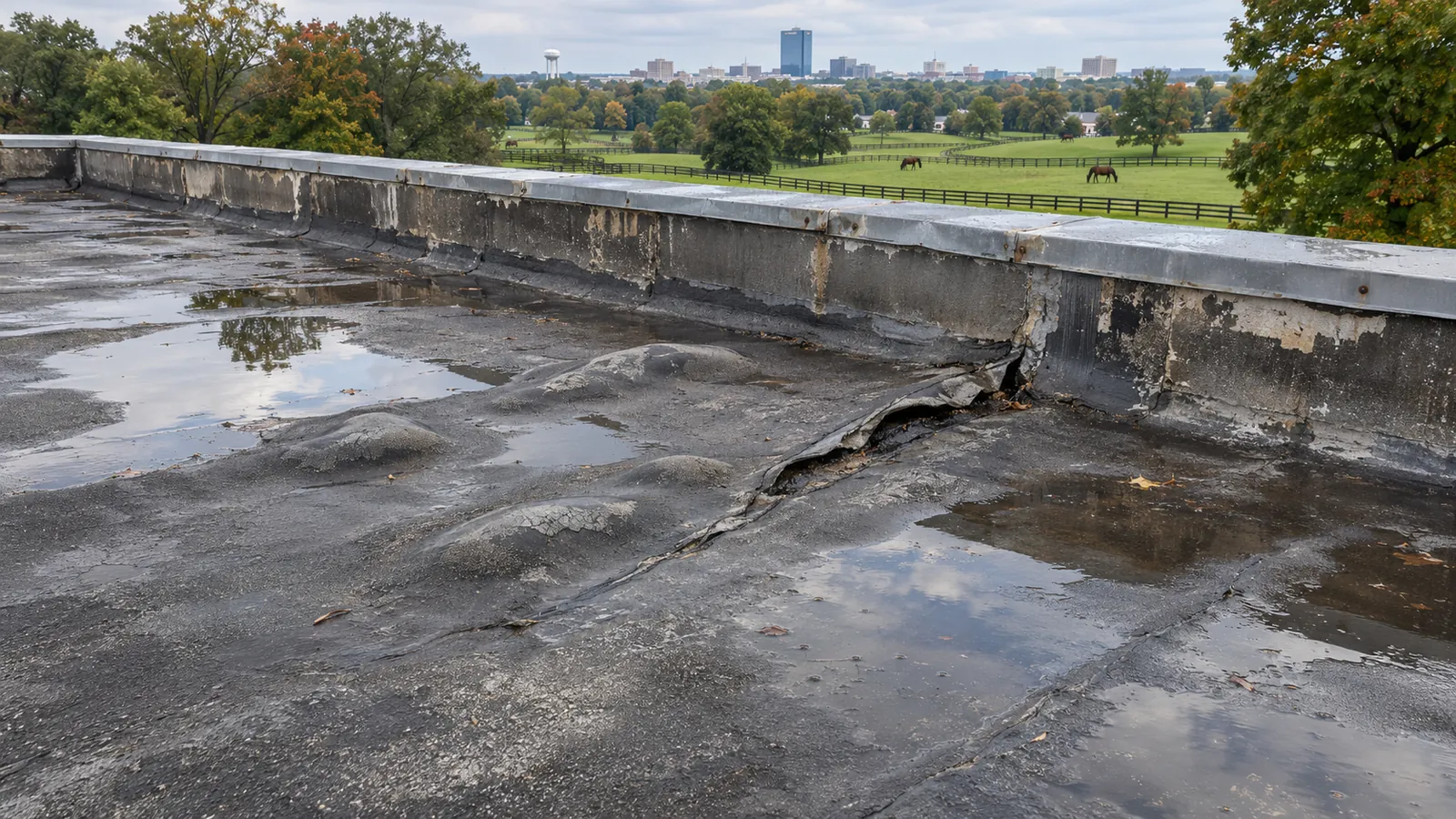
Most problems on a low-slope roof stay repairable while the insulation is dry. Here is how a Lexington flat roof repair contractor sorts the job.
A cover strip welded or taped over the open lap closes it, once a probe confirms the boards are dry.
Those blisters get cut, dried, set back down, and covered with a larger patch.
Clearing strainers and resetting drain bowls comes first, then tapered crickets where water sits behind units.
A core cut beside the leak shows how far the water went, and wide wet areas move the roof toward restoration or replacement.
Low-slope roofs hide damage under the membrane, so the inside clue matters.
Drips start at a deck seam a few feet from any visible stain.
The seam edge has lifted or fishmouthed, often where sheet shrinkage pulls hardest.
Ceiling tiles sag in a ring around the drain line below.
Raised, soft bubbles sit between the plies and swell on hot afternoons.
Condensation-looking drips show up only after long, steady rains.
Water sits in the low spot the curb creates and slowly works into the nearest seam.
Moisture shows along the top of the interior wall under the parapet.
Flashing has pulled away from the parapet face, opening a gap above the membrane.
Each repair below matches a method to the membrane already on the roof.
TPO gets a hot-air welded cover strip after the old sheet is cleaned and test-welded on a scrap. EPDM gets primer and seam tape or a pressure-sensitive strip, and PVC takes a solvent wipe before welding.
Probing around the hole finds any soaked board, which gets replaced first. Then a round-cornered patch of matching membrane goes on with a few inches of overlap on every side.
Drain strainers get cleaned, lines get snaked, and bowls that sit high get lowered. Tapered insulation crickets behind units and between drains push the remaining water off.
On built-up and modified bitumen roofs, blisters are cut in an X, dried, and set back in cement or hot asphalt. A new cap sheet strip covers any lap that opened.
Repairing a seam while the insulation around it is dry keeps the job to a cover strip. Waiting lets water spread through the boards, and every soaked board has to be cut out before the patch can go on.
On a flat roof, the dry boards around a leak are worth protecting.
Clearing drains and adding crickets moves standing water off before it finds the next weak seam.
Most membrane patches go in around rooftop units while they run, with curb flashing work as the exception.
Repeat seam failures in one area show where the sheet is shrinking, which tells you where to budget next.
Ponding that lasts past two dry days works into the nearest seam. Book a visit and we will clear the drains and check the curb.
Schedule Your Free InspectionFive steps take a low-slope repair from the first probe to the final check.
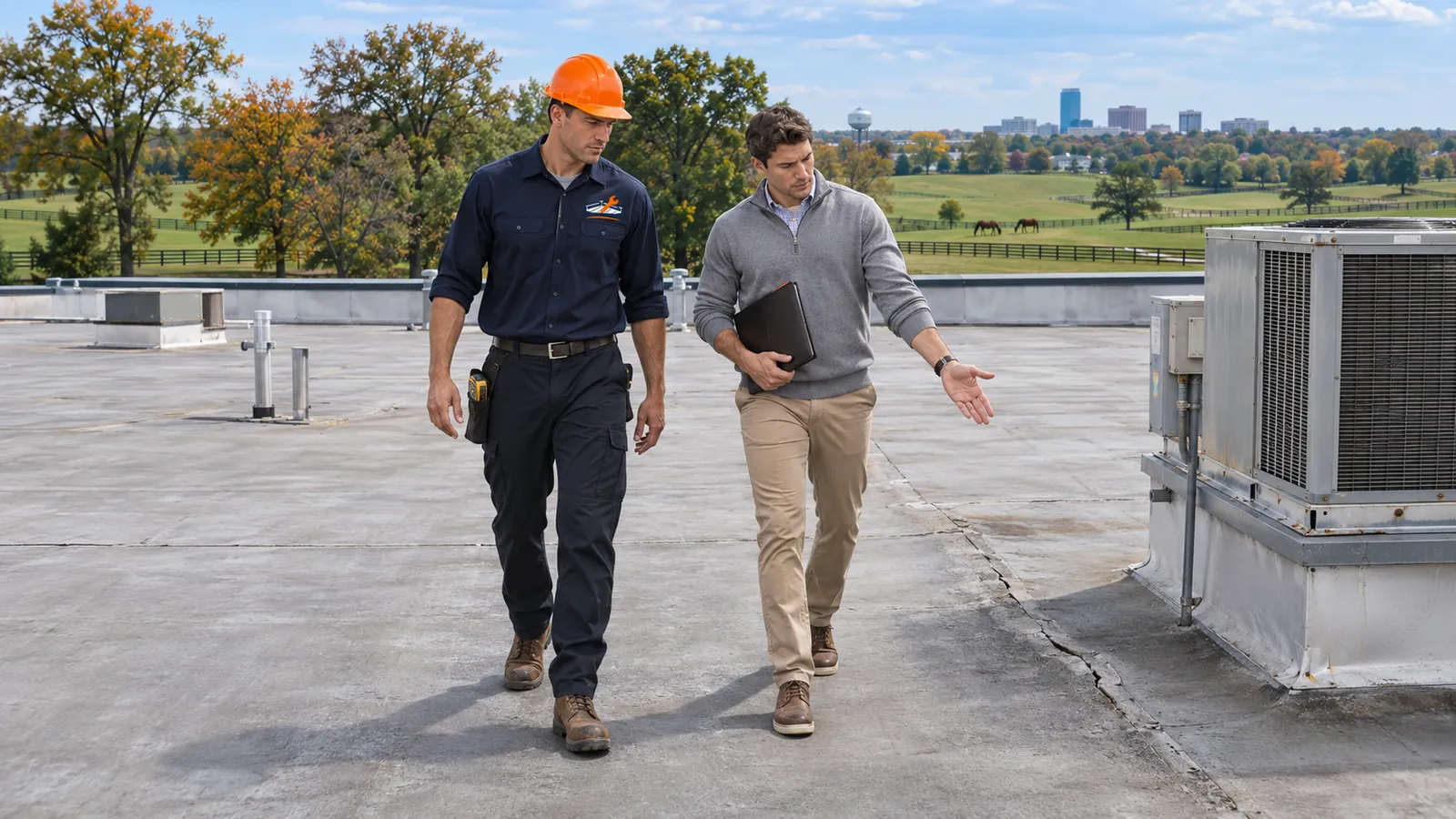
We walk the membrane around the leak, probe seams and flashing, and check drains before deciding what the repair needs.
A core cut or meter reading next to the leak shows whether the boards are dry, and soaked boards come out before anything else.
Old membrane gets scrubbed and, for EPDM, primed. Weathered TPO gets a test weld on a scrap to confirm the new strip will bond.
The cover strip, patch, or cap sheet goes on with rounded corners and full overlap, matched to TPO, EPDM, PVC, or modified bitumen.
Every new seam gets probed end to end, and photos of the repair go to you with notes on nearby laps.
Low-slope buildings often have metal sections, active leaks, or plant equipment too.
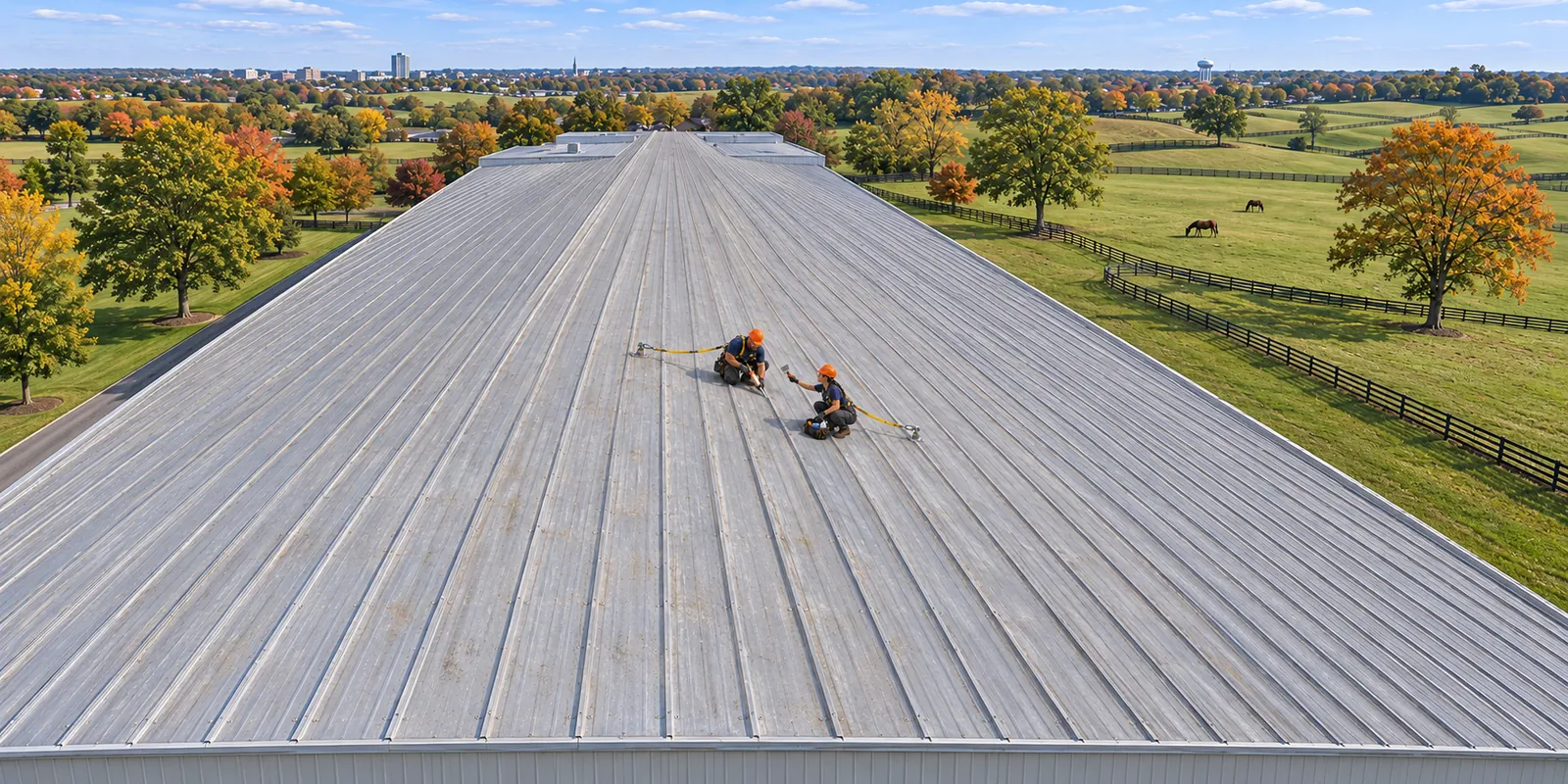
Metal shop additions beside a membrane roof get their own fastener, lap, and ridge cap repairs.
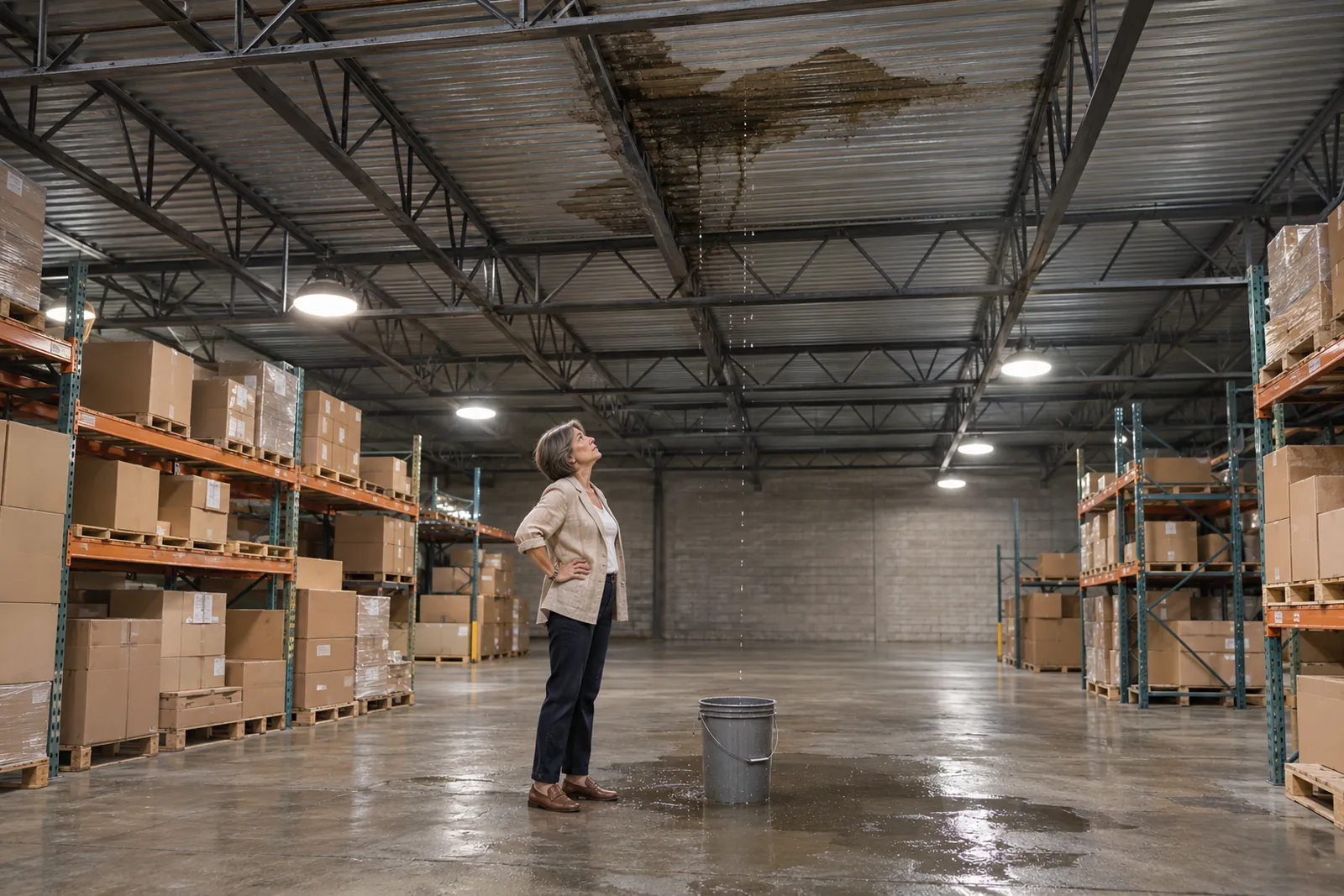
When the drip shows up far from any open seam, tracing along the deck finds the real entry point.
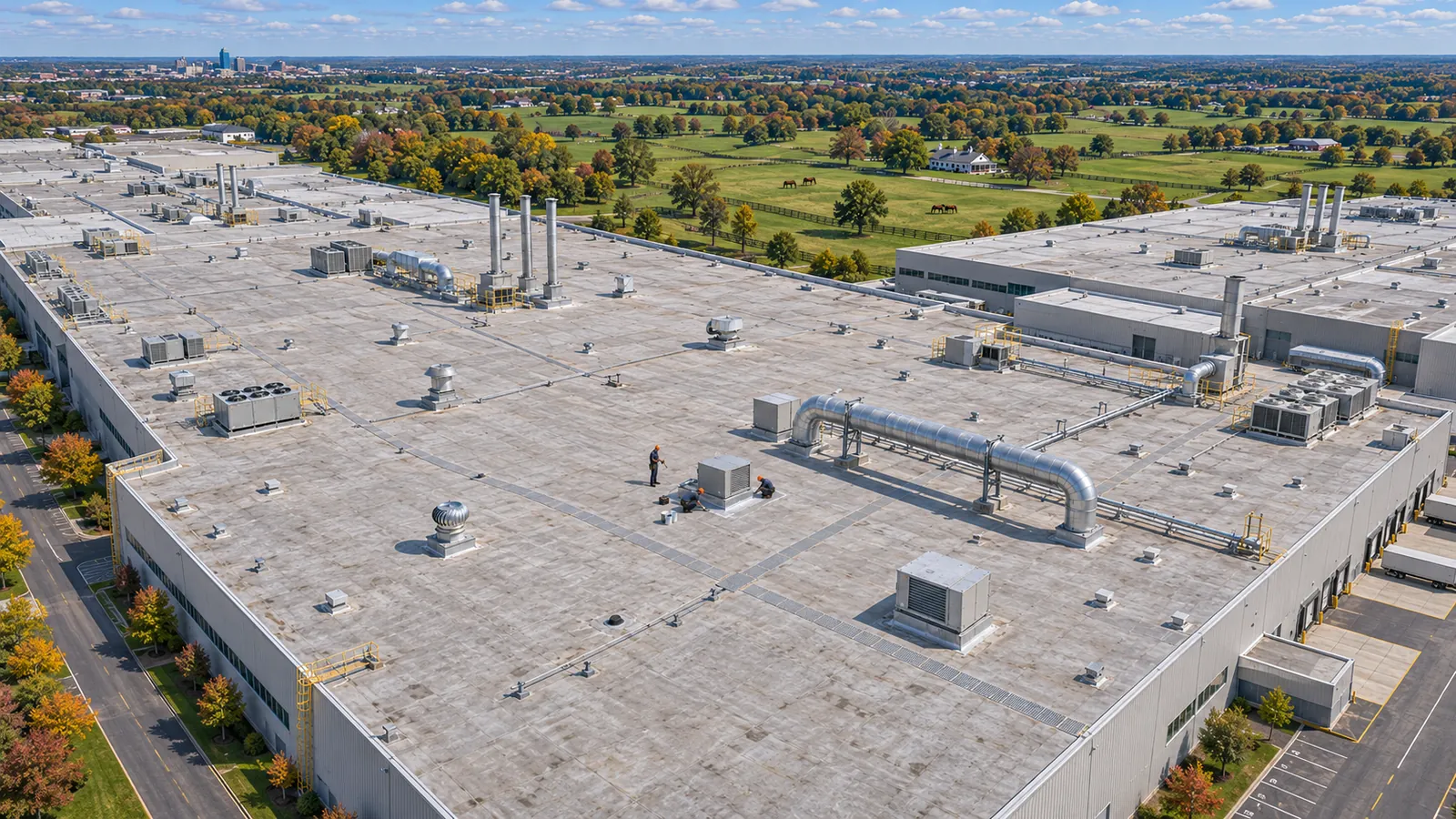
Plant roofs with exhaust fans and long seam runs get repairs scheduled around shifts and hot work rules.
These five questions come up on most low-slope roofs.
Problems confined to seams, flashing, drains, and small punctures can be repaired as long as the insulation around them is dry. That covers fishmouthed single-ply seams, split flashing at parapets and curbs, hail or tool punctures, loose coping, and cracked drain bowls.
Wet insulation beyond the repair area, a deck sagging between joists, or leaks in many places at once push the roof toward restoration or replacement.
Each membrane bonds its own way. TPO and PVC get a hot-air welded cover strip, EPDM gets primer and seam tape or a pressure-sensitive strip, and modified bitumen gets a new cap sheet strip heated or cold-applied over the lap.
Weathered TPO can resist new welds, so a scrap test weld comes first. A seam that reopens beside a repair usually means the whole sheet is shrinking.
Small, firm blisters on built-up or modified bitumen are often watched rather than cut. Soft, growing, or cracked blisters, and any near a seam, get cut in an X, dried, set back in cement or hot asphalt, and covered with a larger patch.
Summer heat expands moisture or air trapped between plies. Clusters across a wide area call for a moisture survey before more patches go on.
Drains come first: strainers cleaned, lines snaked, and bowls reset if they sit above the membrane. Then tapered crickets go behind rooftop units and between drains, and an added drain or scupper is cut in where the structure allows.
Ponding near a column line or mid-span can mean a deflected deck, which an engineer checks first. Water gone within two days of rain is normal on most low-slope roofs.
Start by probing around the hole for wet insulation and replacing any soaked boards. The membrane around the damage is cleaned and prepped, then a round-cornered patch of matching material is welded or taped on with a few inches of overlap all around.
Rounded corners resist peeling. A line of punctures leading to rooftop units shows where walkway pads belong.
Tell us the membrane type and where it leaks. We handle flat roof repair in Lexington, KY, from one open lap to a field of blisters.
Want a call back about your roof?
Or call now: +1 (859) 204-8348